


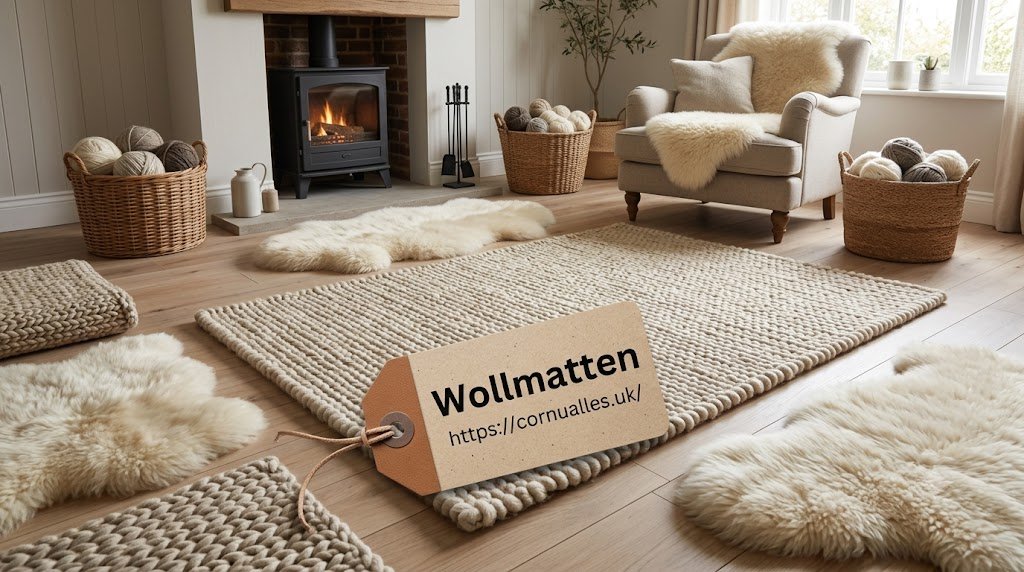
Wollmatten are mats, sheets, pads, or panels made wholly or partly from wool. The word comes from German: Wolle means wool, while Matten is the plural of mat. However, the term does not describe one standardised product. Depending on the context, Wollmatten may refer to decorative floor mats, compressed wool felt, ironing pads, garden mulch mats, plant-protection wraps, acoustic panels, mattress layers, or building-insulation products.
This distinction matters because each type is manufactured differently and serves a different purpose. A dense wool pressing mat used for quilting is not suitable as wall insulation, while a loose insulation batt is not designed to withstand regular foot traffic. Understanding the product’s construction, wool content, density, thickness, treatment, and intended use is therefore more useful than relying on the name alone.
This article explains what Wollmatten are, how they work, where they are used, what benefits they may offer, and what buyers should check before choosing one.
What Does Wollmatten Mean?
Wollmatten is the German plural form commonly translated as wool mats. The singular form is Wollmatte. In ordinary usage, the term can describe almost any flat or layered product made from wool fibres.
Wool itself is a natural animal fibre most commonly obtained from sheep, although fibres from goats, alpacas, llamas, and similar animals may sometimes be included in products marketed more broadly as wool. In most commercial Wollmatten, however, sheep’s wool is the main material.
The fibres may be processed through:
- Wet felting
- Needle punching
- Weaving
- Pressing
- Layering
- Stitch bonding
- Thermal or mechanical compression
The manufacturing method influences the mat’s strength, flexibility, thickness, surface texture, thermal behaviour, and durability.
Needle-punched wool mats, for example, are produced by repeatedly passing barbed needles through loose fibres. This mechanically entangles the fibres and creates a stable sheet without necessarily requiring woven threads. Felted mats are formed by encouraging the microscopic scales on wool fibres to lock together through moisture, heat, agitation, or pressure.
The result can range from a thin craft sheet to a thick structural insulation panel.
Wollmatten Are a Product Category, Not One Product
One of the most common misunderstandings is that all Wollmatten are essentially wool rugs. Some English-language articles use the term this way, but German-language product listings reveal a much wider range of applications.
The same keyword may refer to:
- Small mats placed beneath household objects
- Rugs or floor coverings
- Wool felt sheets for craft projects
- Pressing mats for sewing and quilting
- Acoustic felt for walls and ceilings
- Thermal insulation batts
- Garden mulch mats
- Winter protection for plant pots
- Mattress pads or toppers
- Protective packing material
This broad meaning creates mixed search intent. A person searching for Wollmatten may be researching interior design, gardening, construction, sewing, sustainability, or simply the translation of an unfamiliar German word.
For that reason, the first question when evaluating a product should be: What is this particular Wollmatte designed to do?
Main Types of Wollmatten
Wool Floor Mats and Rugs
Floor-oriented Wollmatten are designed for comfort, decoration, warmth, or surface protection. They may be woven like a rug, felted into a firm pad, or made from tufted wool attached to a backing.
These products are used in entrances, living rooms, bedrooms, seating areas, and beside beds. Their quality depends on more than wool content. Important factors include pile structure, density, edge finishing, backing material, slip resistance, colourfastness, and suitability for the expected level of traffic.
A soft, loosely structured wool mat may feel comfortable but flatten quickly in a busy hallway. A denser felted product may resist compression better but feel firmer underfoot.
Wool Felt Mats
Wool felt is made by compressing and entangling wool fibres into a non-woven textile. Felt mats are available in many thicknesses and may be used beneath furniture, on desks, as protective liners, in crafts, or as part of acoustic installations.
Dense wool felt can provide cushioning and help prevent scratches. It is also easy to cut into custom shapes, although clean cutting becomes more difficult as thickness and density increase.
Not every felt product is pure wool. Some contain wool blended with polyester, rayon, recycled fibres, or other materials. Buyers who specifically want natural wool should check the fibre-composition label instead of assuming that “felt” means wool.
Wool Pressing Mats
A wool pressing mat is used during sewing, embroidery, patchwork, and quilting. It retains heat and provides a firm, slightly gripping surface beneath the fabric. This may allow seams to be pressed efficiently while reducing unwanted movement.
Retail descriptions commonly state that dense felted wool retains heat and reflects it into the fabric from below. Quilting suppliers also emphasise that the textured surface helps hold fabric in position during pressing.
These mats should be placed on a heat-resistant surface. Heat and moisture can pass through the mat, particularly during steam pressing, potentially affecting a wooden, painted, laminated, or plastic table beneath it.
Wool Insulation Mats
Wool insulation mats are used inside walls, roofs, ceilings, floors, and cavities. They are normally produced as flexible batts or rolls rather than decorative mats.
Their main purpose is to slow heat transfer by trapping air within a fibrous structure. Wool can also contribute to sound absorption when used in an appropriately designed building system.
However, insulation performance cannot be judged from the word “wool” alone. Buyers should examine technical data including:
- Thermal conductivity
- Product thickness
- Density
- Fire classification
- Moisture behaviour
- Pest treatment
- Installation method
- Relevant construction certification
A thick mat is not automatically a better insulator if its fibre structure, installation, or thermal conductivity is unsuitable.
Acoustic Wool Mats and Panels
Wool fibres form a porous structure through which sound waves can enter. Friction within that structure converts part of the sound energy into small amounts of heat, reducing reflections in the room.
This makes wool felt useful in acoustic panels, ceiling elements, room dividers, and decorative wall treatments. Sheep-wool products are used in projects intended to improve room acoustics, especially where a natural surface finish is preferred.
Sound absorption should not be confused with soundproofing. A wall-mounted Wollmatte may reduce echo and reverberation inside a room, but it will not necessarily stop traffic, voices, or music from passing through a wall.
Effective sound isolation usually requires a complete construction system involving mass, airtightness, separation, and controlled cavities. The mat may be only one component.
Garden Mulch Mats
Garden Wollmatten are placed on soil around plants. Their purpose may include limiting weed growth, slowing moisture loss, protecting the surface from temperature changes, and gradually adding organic material as the wool breaks down.
Commercial sheep-wool mulch mats are often described as breathable, water-permeable, moisture-regulating, and capable of suppressing weeds. Some are made from pure sheep’s wool without added synthetic material.
Garden mats should not be placed tightly against a plant’s stem or trunk. Leaving a small gap improves airflow and reduces the risk of keeping the crown or bark continuously wet.
Plant-Pot and Winter-Protection Mats
Thicker wool mats may be wrapped around outdoor containers to reduce rapid temperature changes around plant roots. German garden suppliers sell pure sheep-wool mats for insulating pots containing sensitive roses, clematis, and other container plants.
This use is different from placing a mat over foliage. Wool wrapped around a container protects the root zone, while frost fleece over a plant protects exposed growth. In severe winter conditions, both measures may be needed.
Mattress and Seating Layers
Some Wollmatten are used inside mattresses, futons, chair pads, pet bedding, or seat cushions. Wool can provide cushioning and help manage moisture vapour, but repeated compression may cause the material to settle.
The construction should therefore match the load. A loosely carded wool layer may be comfortable inside a mattress yet unsuitable as a thin standalone floor pad.
Comparison of Common Wollmatten Types
| Type of Wollmatte | Main Purpose | Typical Construction | Key Buying Consideration | Common Limitation |
|---|---|---|---|---|
| Floor mat or rug | Comfort and decoration | Woven, tufted or felted wool | Backing, density and slip resistance | May shed or flatten |
| Pressing mat | Sewing and quilting | Dense compressed wool felt | Heat resistance and thickness | Heat and moisture can reach the table |
| Insulation mat | Thermal building insulation | Flexible wool batt or roll | Certified thermal and fire data | Requires correct installation |
| Acoustic panel | Reducing room reflections | Dense felt or wool-filled panel | Tested sound-absorption performance | Does not automatically soundproof |
| Garden mulch mat | Weed control and soil protection | Needle-punched raw or processed wool | Biodegradability and fibre purity | May decompose unevenly |
| Pot-protection mat | Root-zone frost protection | Thick flexible wool sheet | Weather resistance and fastening | May retain moisture against surfaces |
| Craft felt | Cutting and decorative work | Thin pressed or needle-punched felt | Fibre content and stiffness | Blends may behave differently from pure wool |
| Mattress layer | Cushioning and moisture management | Carded or felted wool | Loft, resilience and cleaning method | Compresses with use |
How Wool Mats Work
The performance of Wollmatten comes from the structure of wool fibres rather than from one single property.
Air Trapping
Crimped wool fibres create small spaces that trap air. Still air transfers heat relatively slowly, which is why thick wool layers can reduce heat loss when used correctly.
The same principle explains why a thick winter sweater insulates better than a thin, tightly flattened layer. Loft matters because excessive compression reduces the air held between fibres.
Moisture Interaction
Wool fibres can interact with moisture vapour without immediately feeling wet on the surface. This can help moderate short-term humidity changes within textiles and insulation systems.
That does not mean wool is waterproof. Liquid water can still enter a wool mat, and a soaked product may take a long time to dry. Persistent dampness can create odour, staining, biological growth, corrosion of adjacent materials, or damage to finishes.
Fibre Resilience
Wool is naturally crimped and elastic compared with many flat plant fibres. This can help a mat recover from light compression, although recovery depends on fibre quality, construction, age, moisture, and load.
Heavy furniture can still leave permanent marks in wool rugs and felt products.
Sound Absorption
Porous wool structures allow sound waves to enter rather than reflecting all the energy at the surface. Internal friction then dissipates part of that energy.
Thickness, density, airflow resistance, mounting depth, and the distance from the wall all affect acoustic performance. A thin decorative sheet may soften high-frequency reflections but provide limited absorption at lower frequencies.
Benefits of Wollmatten
Natural Fibre Content
Pure wool mats rely on a renewable animal fibre rather than a fully petroleum-based material. This can appeal to people seeking natural interior finishes, biodegradable garden products, or low-plastic craft materials.
The environmental value still depends on the full product. Dyes, adhesives, synthetic backing, moth treatments, transport, packaging, and product lifespan all influence its impact.
Thermal Comfort
Floor and mattress Wollmatten can reduce the sensation of contact with a cold surface. Building insulation mats may contribute to stable indoor temperatures when specified and installed properly.
Acoustic Comfort
Dense wool felt can reduce hard-surface reflections, making speech easier to understand and rooms feel less echo-prone. The effect is particularly useful in offices, classrooms, recording areas, restaurants, and open-plan interiors.
Surface Protection
Felted mats can protect tables, shelves, floors, ceramics, furniture, and equipment from scratches or minor impact. Their effectiveness depends on thickness and whether grit becomes trapped beneath the mat.
Design Flexibility
Wool felt is available in many thicknesses, colours, shapes, and densities. It can be cut, stitched, laminated, engraved, folded, or mounted onto a rigid backing.
Biodegradability in Suitable Products
Untreated pure-wool garden mats can biodegrade, unlike many plastic weed-control sheets. However, products containing synthetic fibres, plastic nets, coatings, or non-degradable backing should not be treated as fully compostable.
Limitations and Risks
Moths and Other Textile Pests
Untreated wool can be damaged by clothes moth larvae and carpet beetle larvae. These pests feed on animal-based fibres, especially in dark, undisturbed places containing skin oils, food residues, dust, or other organic material.
A clean mat in regular use is less attractive than a neglected one stored for months, but no untreated wool product is automatically pest-proof.
Moisture and Drying Time
Wool can buffer moisture vapour, yet prolonged wetness remains a concern. Thick mats may dry slowly, especially when placed flat against an impermeable surface.
Outdoor mats, bathroom products, plant wraps, and insulation systems require particular attention to drainage and ventilation.
Odour
New wool products may have a natural animal-fibre smell. The intensity varies with washing, processing, moisture, lanolin content, storage, and treatment.
Strong chemical or musty odours may indicate processing agents, damp storage, contamination, or insufficient drying rather than wool itself.
Shedding and Fibre Release
Some new wool rugs and mats shed loose fibres. Light shedding may decrease with use, but ongoing heavy shedding can indicate weak fibre anchoring, low-quality construction, abrasive cleaning, or unsuitable use.
Allergy and Skin Sensitivity
Some people find coarse wool itchy because stiff fibre ends stimulate the skin. This is not necessarily a true allergy. Reactions may also be related to dyes, finishes, dust, lanolin, or treatments used on the product.
People with known sensitivities should request complete material and treatment information before buying.
Fire Claims Can Be Misleading
Wool is often described as naturally flame-resistant compared with many synthetic fibres. That does not make every Wollmatte non-combustible or suitable for regulated building applications.
Backing, adhesives, dyes, density, mounting method, and nearby materials can alter fire behaviour. Construction products should be selected using documented fire-test classifications rather than broad marketing statements.
Sustainability Is Not Automatic
Wool is renewable and potentially biodegradable, but sheep farming requires land, water, animal care, processing, and transport. Chemical scouring, dyeing, anti-moth treatment, synthetic reinforcement, and short product life can reduce the environmental advantage.
A durable, repairable wool product may offer better value than a poorly made “natural” mat that must be replaced frequently.
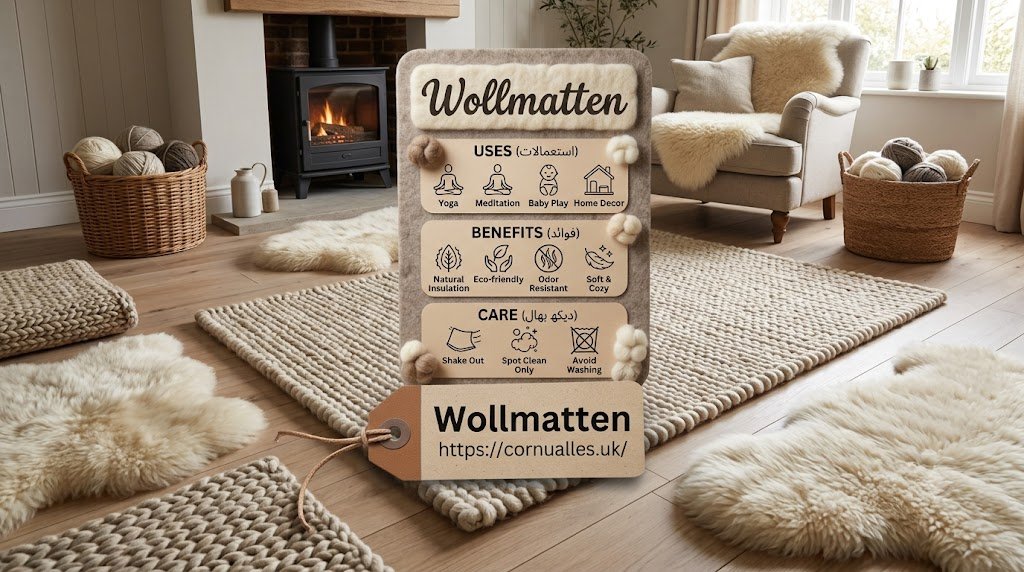
Wollmatten Compared With Other Mat Materials
Wool vs Synthetic Felt
Synthetic felt is usually made from polyester or recycled PET. It may be cheaper, more dimensionally stable, easier to clean, and more resistant to moth damage.
Wool felt generally offers a natural surface, good resilience, moisture interaction, and a distinctive tactile quality. Synthetic felt may be preferable in damp, high-wear, or budget-sensitive settings.
For acoustic use, product-specific density and test results matter more than fibre identity alone. Some high-density PET panels may outperform thinner wool felt, while a correctly designed wool panel may perform very well.
Wool vs Cotton Mats
Cotton is soft, washable in many constructions, and usually suitable for lightweight household mats. It tends to absorb liquid water readily and may dry slowly when thick.
Wool generally provides greater natural resilience and thermal comfort but may require more cautious cleaning.
Wool vs Coir
Coir is made from coconut husk fibres. It is coarse, stiff, and widely used for entrance mats, erosion-control products, and garden applications.
Wool feels softer and offers different moisture and thermal behaviour. Coir is often better for scraping dirt from shoes, while wool may be more suitable for interior comfort or plant insulation.
Wool vs Jute
Jute mats are affordable, plant-based, and visually distinctive. They perform best in dry indoor settings because moisture can cause staining, swelling, odour, or deterioration.
Wool may feel warmer and more resilient but is usually more expensive.
Wool vs Rubber
Rubber mats provide grip, water resistance, and easy cleaning. They are often a better choice for wet entrances, workshops, gyms, and utility spaces.
Wool is preferable when softness, acoustic absorption, natural appearance, or thermal comfort is the priority.
How to Choose the Right Wollmatten
Start With the Intended Use
Do not buy a mat based only on appearance. Determine whether it will be used for walking, insulation, pressing fabric, protecting furniture, reducing echo, covering soil, or wrapping a plant pot.
Each application requires different performance.
Check the Fibre Composition
Look for a clear percentage such as:
- 100% virgin wool
- 100% sheep’s wool
- 80% wool and 20% polyester
- Recycled wool blend
- Wool surface with synthetic backing
“Wool-like,” “wool touch,” and “felt style” do not guarantee any wool content.
Examine Density and Thickness
Thickness provides useful information, but density is equally important. Two 10-millimetre mats can behave very differently if one is soft and loosely formed while the other is highly compressed.
For pressing, protective felt, and structural panels, a firm and consistent density is usually desirable. For insulation, loft and technical thermal data are more relevant.
Ask About Treatments
Manufacturers may treat wool for:
- Moth resistance
- Fire performance
- Water repellency
- Stain resistance
- Colour stability
- Odour control
Treatments can improve practicality but may affect biodegradability, indoor emissions, disposal, and suitability for organic gardening.
Review the Backing
A mat may contain natural wool on top but plastic, latex, synthetic felt, adhesive, or foam underneath.
Backing influences slip resistance, breathability, washing, drying, recycling, floor compatibility, and outdoor suitability.
Look for Application-Specific Testing
For construction and acoustic products, request technical documentation. Depending on the use, this may include:
- Thermal conductivity
- Sound-absorption coefficients
- Fire classification
- Emissions testing
- Dimensional stability
- Product certification
Household and craft mats rarely require the same documentation, but clear care and material information still matter.
Consider Maintenance Before Purchase
A cream-coloured wool rug may look attractive but require frequent care in an entrance. A thick garden mat may suppress weeds well but become difficult to move when saturated.
Choose according to real conditions rather than ideal photographs.
How to Clean and Maintain Wool Mats
Cleaning instructions vary considerably, so the manufacturer’s label should take priority.
Routine Cleaning
For dry household Wollmatten:
- Vacuum gently using low or moderate suction.
- Avoid aggressive rotating brushes on delicate felt.
- Shake small mats outdoors where appropriate.
- Remove grit from both the mat and the surface beneath it.
- Rotate floor mats periodically to balance wear and light exposure.
Spill Treatment
Blot liquid immediately with an absorbent, colourfast cloth. Do not rub aggressively, as this may spread the stain or disturb the fibre surface.
Use cool or lukewarm water unless the care label states otherwise. Excessive heat and agitation can cause shrinkage or felting.
Deep Cleaning
Large rugs, dense felt panels, and mattress layers may require professional cleaning. Fully immersing a thick wool product can lead to distortion, slow drying, dye movement, or odour.
Drying
Dry wool thoroughly with airflow. Avoid placing a damp mat back onto wood, laminate, paint, metal, or another moisture-sensitive surface.
Do not tumble-dry unless the manufacturer specifically allows it.
Storage
Store clean, completely dry wool in a breathable but pest-resistant covering. Inspect long-term storage periodically rather than leaving the material undisturbed for years.
Frequently Overlooked Facts About Wollmatten
The German Term Does Not Prove German Origin
A product described as Wollmatten may be manufactured anywhere. The word identifies the product type, not its country of manufacture.
Buyers seeking German-made goods should check the manufacturer’s address, origin statement, or certification rather than relying on the German product name.
“Pure Wool” Does Not Mean Untreated Wool
A mat can contain 100% wool fibre and still have dyes, mothproofing agents, water-repellent finishes, flame treatments, or adhesive applied to it.
Material composition and chemical treatment are separate questions.
Biodegradable Does Not Mean Home-Compostable
Pure untreated wool can decompose biologically, but the process may be slow. Thick, dense felt may take much longer to break down than loose fibres.
A product containing synthetic threads, backing, resin, coatings, or plastic packaging should not be assumed to be home-compostable.
Acoustic Absorption Depends on Installation
Attaching a thin mat directly to a solid wall usually produces less low-frequency absorption than using a thicker panel with an air gap behind it.
The same material can therefore perform differently depending on how and where it is installed.
Wool Mulch Can Influence Plant Nutrition
Wool contains nitrogen and other nutrients that may become available gradually as the fibres decompose. However, decomposition depends on soil life, moisture, temperature, fibre treatment, and contact with the soil.
A wool mulch mat should not be treated as a precisely measured replacement for a balanced fertiliser unless the product provides verified nutrient data.
Garden Wool Must Be Evaluated for Contamination
Raw or minimally processed sheep wool may contain dirt, plant fragments, grease, treatment residues, or manure. Products intended for food-growing areas should have transparent sourcing and processing information.
Pressing Mats Can Mark Furniture
Steam and heat may pass through a wool pressing mat. Repeated pressing on a polished dining table can cause moisture rings, finish softening, discolouration, or heat damage.
A rigid heat-resistant barrier should be used underneath.
Are Wollmatten Environmentally Friendly?
Wollmatten can be a lower-plastic option, especially when made from minimally processed wool, used for many years, and disposed of responsibly. Garden products made from otherwise low-value sheep wool may also create a use for fibres unsuitable for clothing.
Still, environmental performance should be assessed across the entire life cycle.
Questions worth asking include:
- Is the wool traceable?
- Is it recycled, virgin, or a blend?
- How was it washed and dyed?
- Does it contain synthetic reinforcement?
- Was it treated with persistent chemicals?
- How long is the expected lifespan?
- Can it be repaired?
- Can the backing be separated?
- What disposal route is realistic?
A product is not automatically sustainable because its main fibre is natural.
When Wollmatten May Not Be the Best Choice
Wool mats are versatile, but another material may be more practical when:
- The area is continuously wet.
- Frequent machine washing is essential.
- Severe moth exposure cannot be controlled.
- Chemical resistance is required.
- The surface must be disinfected repeatedly.
- Very low cost is the main priority.
- A certified non-combustible construction product is required.
- A thin wall covering is expected to block loud external noise.
- The user has a confirmed sensitivity to wool or product treatments.
In these situations, rubber, washable cotton, closed-cell foam, mineral fibre, cork, coir, or recycled PET may be more suitable depending on the purpose.
Frequently Asked Questions
What are Wollmatten?
Wollmatten are wool-based mats, sheets, pads, or panels. The German word translates directly as “wool mats,” but it can refer to several products, including rugs, felt sheets, pressing mats, acoustic panels, building insulation, mulch mats, and plant-protection wraps.
Are Wollmatten made from 100% wool?
Some are, but many are blends. A Wollmatte may contain wool mixed with polyester, recycled textile fibres, adhesives, latex, foam, or synthetic backing. Check the fibre-composition label and product specification instead of relying only on the name.
Can Wollmatten be washed?
Some small wool mats can be hand-washed, while others should only be vacuumed, spot-cleaned, or professionally cleaned. Heat, friction, and sudden temperature changes can cause shrinking or felting. Always follow the manufacturer’s care instructions.
Do wool mats attract moths?
Untreated wool can be damaged by clothes moth larvae and carpet beetle larvae, especially when stored in dark, undisturbed locations. Regular cleaning, dry storage, inspection, and appropriate pest prevention reduce the risk.
Are Wollmatten good for soundproofing?
They can absorb reflected sound and reduce echo, particularly when thick, dense, and correctly mounted. They do not automatically prevent sound from travelling through walls. True soundproofing usually requires a complete construction system with mass, airtightness, and structural separation.
Can Wollmatten be used in a garden?
Yes, products made specifically for gardening can be placed around plants as mulch or wrapped around pots for winter protection. Confirm that the mat is water-permeable, suitable for outdoor use, and free from unwanted synthetic backing or treatments.
Are wool pressing mats safe for tables?
Not by themselves in every case. Heat and steam can travel through the wool and damage wood, paint, laminate, or plastic. Place the pressing mat over a rigid, heat-resistant and moisture-resistant protective board.
How long do Wollmatten last?
Lifespan varies by construction and use. A well-made indoor felt or rug may last for years, while an untreated garden mulch mat may be designed to decompose within one or several growing seasons. Moisture, traffic, pests, sunlight, cleaning, and fibre density all affect durability.
Conclusion
Wollmatten are not one narrowly defined product but a broad family of wool-based mats used in homes, gardens, sewing rooms, acoustic interiors, mattresses, and buildings. Their natural fibre structure can provide warmth, cushioning, moisture interaction, sound absorption, and surface protection.
The right choice depends on purpose. Buyers should examine fibre content, density, thickness, backing, treatments, technical testing, cleaning requirements, and exposure to moisture or pests. A decorative floor mat, insulation batt, garden mulch sheet, and quilting pad may all be called Wollmatten, yet they cannot be evaluated by the same standards.
The clearest takeaway is to look beyond the name. When the construction and performance match the intended application, Wollmatten can be practical, durable, and versatile natural-fibre products.
Also Read… Cornualles.uk
