


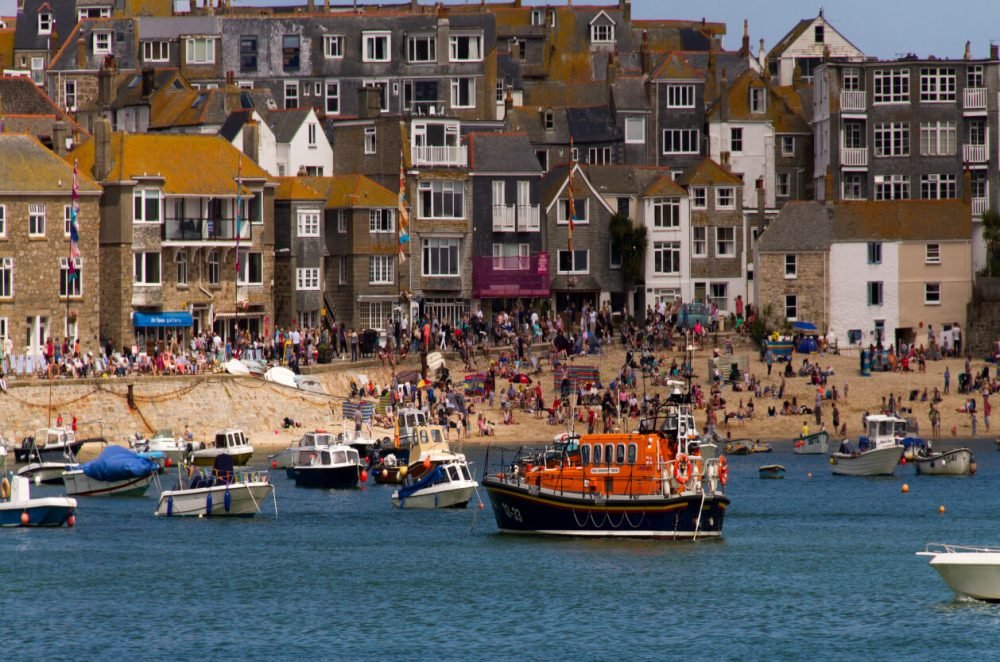
St Ives looks deceptively simple on a map: a harbour, a maze of old streets, several beaches and a headland. Yet the real answer to what to do in St Ives is to treat the town as several different experiences packed into one compact corner of west Cornwall.
You can surf Atlantic waves in the morning, see major modern art before lunch, walk a cliff path in the afternoon and eat beside the harbour as the tide returns. That combination of sea, landscape, art and working-town history is what makes St Ives far more than a pretty Cornish stop.
This guide covers the places genuinely worth your time, how to group them sensibly and the practical mistakes that can turn an easy day into a frustrating one. In other words, what to do in St Ives depends as much on timing and conditions as on the attraction list.
What to Do in St Ives First: Start at the Harbour and Old Town
For first-time visitors asking what to do in St Ives, begin at the harbour. It gives you the quickest sense of how the town fits together.
Walk the waterfront rather than treating it as a route from A to B. Fishing boats, tidal sand, cafés, old stone buildings and narrow lanes all meet here. From the harbour, you can reach the main shopping streets, St Ives Island, Porthmeor Beach and several galleries on foot.
Then turn into the old lanes behind the seafront. Independent shops, small galleries and glimpses of the water appear between tightly packed buildings.
Best tip: explore early in the morning or later in the afternoon, when the centre is calmer.
1. Visit Tate St Ives for Art With an Atlantic Backdrop
Any serious list of what to do in St Ives should include Tate St Ives, even if you do not normally plan holidays around galleries.
The gallery overlooks Porthmeor Beach and has a strong focus on modern and contemporary art, including artists and movements linked with the town. St Ives became an important centre for British modernism, particularly after the Second World War.
Allow time for the building and sea views, not just the exhibitions.
Smart pairing: visit Tate in the late morning, then walk straight onto Porthmeor Beach.
2. See the Barbara Hepworth Museum and Sculpture Garden
For art lovers, the Barbara Hepworth Museum can be even more affecting than a conventional gallery.
The museum preserves Hepworth’s former home, studio and garden. The relationship between sculpture, plants, space and Cornish light is central to the experience. Visit Cornwall notes that it is about a ten-minute walk from Tate St Ives and displays more than 30 sculptures in bronze, stone and wood.
When deciding what to do in St Ives on a wet or changeable day, pairing Tate with the Hepworth Museum gives you an excellent half-day.
3. Spend Proper Time on Porthmeor Beach
Porthmeor is the broad Atlantic-facing beach beside Tate. It is the obvious choice for surfing, bodyboarding and watching bigger seas.
The RNLI describes Porthmeor as popular with surfers and swimmers. For 2026, lifeguard patrols are scheduled daily from 3 April to 1 November, generally 10am to 6pm; patrol details can change, and “no flags” means no lifeguards.
This is where what to do in St Ives becomes weather-dependent. On a calm summer day you may stay for hours. In rougher conditions, come for wave watching, photography and a coastal walk instead.
Safety: swim between the red-and-yellow flags when lifeguards are operating.
4. Choose Porthminster Beach for a Gentler Beach Day
Porthminster sits close to the railway station and usually feels more sheltered than Porthmeor.
The RNLI describes it as a half-mile sandy beach well suited to families, with calmer water and facilities nearby. In 2026, scheduled lifeguard cover runs daily from 16 May to 27 September, 10am to 6pm, subject to operational changes.
For families researching what to do in St Ives, Porthminster is often the easier beach choice. It also puts you in the right direction for the coastal walk toward Carbis Bay.
5. Walk Around St Ives Island for Big Views With Minimal Effort
“The Island” is the grassy headland between Porthmeor and Porthgwidden.
It offers some of the best views for the least effort: St Ives Bay, the harbour, Porthmeor and the open Atlantic all appear from a short circuit. Visit Cornwall specifically recommends the cliff path from the harbour toward St Ives Island for its coastal views.
Go near sunset in clear weather, but keep away from exposed cliff edges in strong winds.
What to Do in St Ives Outdoors: Walk the Coast Path
If Cornwall means walking boots to you, the South West Coast Path is central to what to do in St Ives.
The full National Trail runs for 630 miles, but short sections around St Ives are enough to get the experience.
Try one of these:
- Carbis Bay to St Ives: about 1.2 miles (2 km), graded easy, with excellent bay views.
- Lelant to St Ives: about 4.5 miles (7.2 km), a moderate route beside the bay and railway corridor.
- Toward Zennor: far more demanding. The official route information describes the wider St Ives-to-Pendeen section as one of the toughest parts of the trail, with rough, rocky and sometimes boggy ground.
Do not judge the Zennor direction by mileage alone. Progress can be slow.
7. Take the Train Between St Erth and St Ives
This is transport that doubles as sightseeing.
The branch line approaches St Ives around the bay, giving elevated coastal views without the hassle of taking a car into the centre. Visit Cornwall notes that the St Erth–St Ives railway opened in 1887 and helped transform the fishing port into a major visitor destination.
Cornwall Council confirms that St Erth station also functions as a park-and-ride point, allowing visitors to park and continue to St Ives by train.
For anyone planning what to do in St Ives in peak season, arriving this way can save time as well as provide a better view.
8. Explore St Ives Museum for the Town Behind the Postcard
The art story dominates most travel guides, but St Ives also has a deep fishing, maritime and social history.
St Ives Museum brings much of that together. For the 2026 season, it says it is open until 31 October, Monday to Friday from 10:30am to 4:30pm and Saturday from 10:30am to 3:30pm. Adult admission is listed at £5, with under-16s free.
It is a strong choice when you want more substance than another hour of shopping.
9. Browse Independent Galleries — Selectively
St Ives has far more art than you can absorb in a day.
After Tate and Hepworth, make time for smaller galleries and studios. Visit Cornwall highlights Penwith Gallery as part of the town’s wider art circuit.
The wrong approach is to “complete” every gallery. Pick two or three that genuinely catch your eye and spend proper time with the work.
That usually produces a much better experience than racing between exhibition spaces simply because they appear on a top-ten list.
10. Check the Leach Pottery Before You Go
The Leach Pottery is a major part of St Ives’ craft history, founded in 1920 by Bernard Leach and Shōji Hamada.
But this is exactly where a current guide should beat stale listicles.
The museum and exhibition spaces are presently closed for major restoration, while the shop remains open. Current official pages contain differing reopening references, with the most detailed visitor page now saying restoration is expected to be completed in 2027. Check the official site before making a special trip.
When researching what to do in St Ives, live status checks matter. Redevelopments are where old travel content becomes actively unhelpful.
11. Take a Boat Trip From the Harbour
Getting onto the water changes the perspective completely.
Local trips typically explore St Ives Bay or nearby wildlife-viewing areas, with exact routes depending on sea conditions. Visit Cornwall includes boat excursions among the town’s core activities and recommends them for seeing the coastline and marine life.
Use a reputable operator, check cancellation terms and keep a backup plan in case conditions change.
Do not assume a booking automatically guarantees departure. On the Cornish coast, wind and sea state get the final vote.
What to Do in St Ives With Kids: Keep the Day Flexible
Parents searching what to do in St Ives should avoid over-scheduling. The town works best when one structured activity is followed by open beach or exploring time.
A simple family plan:
- Morning: Porthminster Beach.
- Lunch: picnic or early café stop.
- Afternoon: St Ives Museum, harbour or the Island.
- Late afternoon: another beach stop if the weather holds.
St Ives Museum offers a children’s trail and free entry for under-16s.
For swimming, choose a lifeguarded beach when possible and follow the RNLI’s flags and current safety guidance.
The important point is not to cram five paid attractions into a family day. St Ives itself provides much of the entertainment.
13. Eat With the Tide, Not Just the Clock
St Ives has plenty of cafés, seafood restaurants, bakeries and pubs, but meal planning works better when it follows your route.
Eat near Porthmeor if you are combining Tate with the beach. Choose the harbour for evening atmosphere. Buy something portable before a coast-path walk rather than assuming food will appear exactly when you need it.
For many visitors, what to do in St Ives becomes unnecessarily expensive because every pause becomes a sit-down meal in the busiest part of town. Mix one booked meal with simpler stops.
And keep an eye on gulls. They are not subtle.
14. See St Ives Early in the Morning
This costs nothing and may be the best hour of your visit.
Walk the harbour before breakfast, continue toward Smeaton’s Pier, then loop through the old streets while the town is waking up.
You will notice more architecture, get cleaner photographs and experience a calmer side of the centre.
If you only see St Ives between midday and 4pm in August, you are seeing it at maximum pressure. That is not necessarily the version of the town you will remember most fondly.
15. Stay for Sunset at Porthmeor or the Island
Do not automatically leave when shops begin to close.
Porthmeor gives you direct Atlantic evening light, while the Island provides broader coastal views. Bring an extra layer even in summer; exposed ground cools quickly.
For couples wondering what to do in St Ives after dinner, the simplest answer is often the best: walk, watch the light change and let the town quieten.
It costs nothing and requires no reservation.
16. Visit Carbis Bay Without Moving Your Car
Carbis Bay is close enough to combine with St Ives but different enough to feel like a separate stop.
Walk there on the coast path and return by train, or reverse the route. The official South West Coast Path route from Carbis Bay station to St Ives is around 1.2 miles and graded easy.
It is a smart half-day option when the centre feels crowded.
You also avoid the pointless cycle of driving a short distance, finding another parking space and then walking almost as far as you would have done anyway.
17. Build Your Day Around Weather, Tide and Crowds
The biggest planning mistake is creating a rigid checklist.
The best answer to what to do in St Ives depends on three variables: weather, tide and crowd levels.
Calm conditions favour beaches and boats. Wet weather increases the value of galleries and museums. Low tide changes the harbour completely. Strong wind can turn an exposed walk into a bad decision.
When choosing what to do in St Ives, use a first choice and a backup:
- Sunny and calm: beach, boat trip, Island, coast path.
- Wet or windy: Tate, Hepworth, museum, cafés, galleries.
- Very busy: arrive by train, start early, walk toward Carbis Bay and spend less time in the harbour core.
Flexibility is what separates a good day from one spent queuing and constantly changing plans.
How Long Do You Need in St Ives?
You can see the centre in a day, but two or three days is a better fit.
One day: harbour, Tate or Hepworth, Porthmeor, Island and dinner.
Two days: add a coast walk, St Ives Museum and more beach time.
Three days: include Carbis Bay, a boat trip and a slower gallery or food day.
People researching what to do in St Ives often underestimate how much time disappears simply sitting by the water, browsing galleries or waiting for the light to change.
That is not wasted time. It is part of the reason to come.
Is St Ives Better in Summer or Outside Peak Season?
There is no universal winner.
Summer gives you warmer conditions, longer evenings and the greatest range of beach activity. It also brings substantially more pressure on streets, restaurants, accommodation and transport.
Spring and early autumn can give you more breathing room while still offering good walking and sightseeing conditions. Winter is quieter again, but some seasonal attractions, businesses and services operate reduced schedules.
That makes checking current opening information particularly important outside the main season.
For photographers, walkers and visitors primarily interested in art rather than swimming, the shoulder seasons can be especially rewarding.
Conclusion: The Best St Ives Trip Is Planned, but Not Over-Planned
The strongest answer to what to do in St Ives is not a race through 17 attractions.
Choose a few anchors — perhaps Tate, Porthmeor, the harbour and a coast walk — then leave room for the town to interrupt your schedule.
Before settling on what to do in St Ives, arrive intelligently in peak season. Use the St Erth rail connection when it makes sense. Check attraction websites before travelling, especially where redevelopment is under way.
Respect sea conditions rather than assuming a sunny day automatically means safe swimming. Give yourself at least one early morning or evening when St Ives is quieter.
Do that and you will see more than the postcard: an art colony, fishing port, surf town, walking base and lived-in Cornish community layered together in one small place.
That is ultimately why St Ives remains worth more than a hurried photo stop.
FAQs About What to Do in St Ives
1. What are the best things to do in St Ives for a first visit?
Start with the harbour, Tate St Ives, the Barbara Hepworth Museum, Porthmeor Beach and St Ives Island.
Add the old town lanes and sunset by the sea if you have a full day. That combination gives you the best mix of art, scenery and local character without turning the visit into an exhausting checklist.
For a one-day trip, resist the temptation to add too many places outside the town.
2. What to do in St Ives when it rains?
Rain does not ruin St Ives.
Visit Tate St Ives, the Barbara Hepworth Museum and St Ives Museum, then browse independent galleries and shops between showers.
Carry a waterproof layer rather than writing off outdoor sightseeing completely. Cornish conditions can shift quickly, and short dry periods can still give you enough time for the harbour, old streets or a walk around the Island.
3. What to do in St Ives without a car?
Arrive by rail via St Erth, then explore the harbour, beaches, Tate, Hepworth Museum and centre on foot.
You can also combine the branch railway with the South West Coast Path to visit Carbis Bay or Lelant.
Cornwall Council confirms that St Erth station can be used for parking followed by onward train travel to St Ives.
In busy periods, travelling without a car may actually make the visit simpler rather than more difficult.
4. Is St Ives worth visiting for one day?
Yes, but be selective.
Prioritise the harbour, one major art attraction, Porthmeor or Porthminster Beach and the Island. Arrive early and avoid wasting your best hours searching for central parking.
One day covers the highlights. Two or three days gives you a much better pace and allows time for a coastal walk, Carbis Bay, a boat trip or simply sitting beside the sea.
5. What is the best free thing to do in St Ives?
Walk.
The harbour, old streets, St Ives Island, beaches and sections of the South West Coast Path provide some of the town’s strongest experiences without an admission charge.
The Carbis Bay–St Ives section is particularly manageable at roughly 1.2 miles, while routes west from St Ives become considerably more demanding.
