Temp Plus: Meaning, Uses, Features, and Everything You Should Know
Temp Plus is a term that can refer to different products, services, and businesses depending on the context. One important consideration when researching this keyword is identifying the correct product or organization before relying on information found online.
This guide explores the available meanings of Temp Plus, its possible applications, related terminology, and what readers should check when looking for a specific Temp Plus product or service.
SEO Search Intent and Content Strategy
-
Primary intent: Informational.
-
Secondary intent: Product research and brand identification.
-
Likely audience: People searching for Temp Plus equipment, medical thermometers, related products, or companies using this name.
-
Content gap: Search results mix medical equipment, staffing businesses, and unrelated products. A useful article should distinguish these meanings instead of treating them as one product.
-
Information gain: Explain the IVAC Temp Plus thermometer family, its clinical purpose, basic operation, safety considerations, and how to identify the correct model.
Understanding Temp Plus
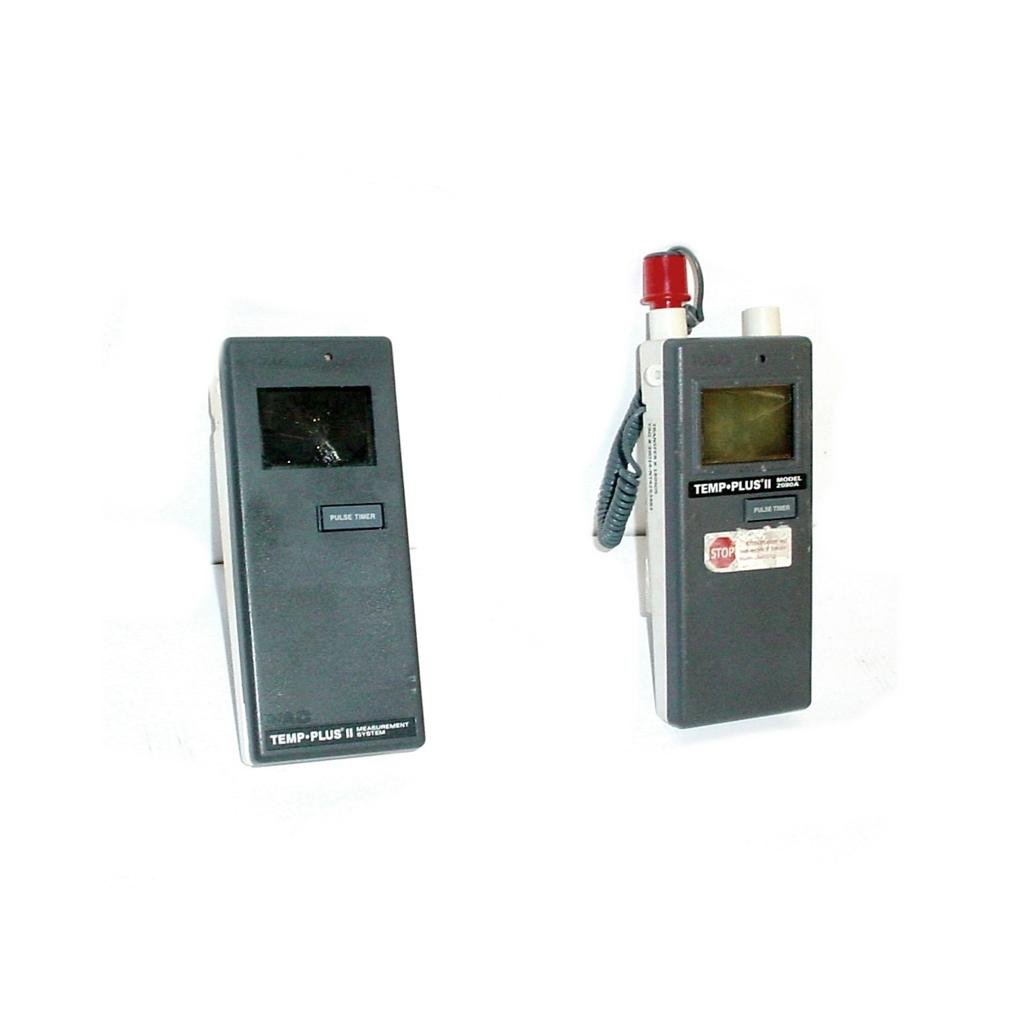
The term Temp Plus has appeared in medical equipment records, particularly in connection with electronic clinical thermometers manufactured by IVAC.
The Temp Plus thermometer family includes models designed to measure human body temperature in healthcare settings. These devices were developed for clinical use, where healthcare professionals need reliable temperature readings as part of routine patient assessment.
For example, the US Food and Drug Administration (FDA) maintains a record for the IVAC Model 2082 Temp Plus III thermometer and Model 2087 wall-mounted version. The record identifies oral, rectal, and axillary temperature measurement as their intended uses.
Access Data FDA+1
However, Temp Plus is not necessarily the name of one universally recognized product. Some search results also refer to staffing companies and other unrelated products. Checking the manufacturer and model number is therefore important.
What Is the Temp Plus Thermometer?
The Temp Plus thermometer is part of an older generation of electronic clinical temperature-monitoring equipment associated with IVAC.
Unlike traditional glass thermometers, electronic clinical thermometers use a temperature sensor and electronic components to measure and display a patient’s body temperature.
The Temp Plus III models were designed for professional healthcare environments. Their intended measurement sites include:
-
Oral temperature measurement
-
Rectal temperature measurement
-
Axillary temperature measurement (under the arm)
The FDA classified the Model 2082 and Model 2087 submission under its clinical thermometer regulatory category. Its decision was recorded on October 1, 1996.
Understanding Different Temp Plus Models
Not every product carrying the Temp Plus name has identical specifications.
| Model | Description |
|---|---|
| Temp Plus II (2080) | Earlier electronic clinical thermometer |
| Temp Plus III (2082) | Electronic clinical thermometer |
| Temp Plus III (2087) | Wall-mounted thermometer version |
Historical regulatory documentation identifies the Temp Plus II as an electronic thermometer for general hospital and alternative-site use.
Note: These are historical product models. This table does not establish current availability or manufacturer support.
How Does a Temp Plus Thermometer Work?
Electronic clinical thermometers use sensors to detect temperature changes and convert them into an electronic measurement.
The general process involves several steps.
1. Preparing the Device
Before taking a reading, healthcare staff should inspect the thermometer, check its condition, and ensure that the correct compatible probe and protective cover are available.
2. Selecting the Measurement Site
The appropriate measurement site depends on the device’s instructions and the patient’s circumstances.
Common clinical measurement sites include:
-
Mouth (oral)
-
Underarm (axillary)
-
Rectum (rectal)
The correct probe and approved procedure must be used for each measurement site.
3. Taking the Temperature
The probe is positioned at the appropriate measurement location. The thermometer’s electronic sensor detects temperature and processes the reading.
4. Reading the Result
The displayed result can help healthcare professionals assess a patient’s temperature and identify possible fever or abnormal temperature changes.
5. Cleaning and Storage
Reusable equipment must be handled according to its manufacturer’s cleaning and infection-prevention instructions. Single-use probe covers should never be reused.
Key Features of Temp Plus Clinical Thermometers
The exact features depend on the model, so buyers and healthcare professionals should consult the relevant technical documentation.
Some important characteristics of this type of clinical equipment include:
Electronic Temperature Measurement
Electronic sensors provide numerical temperature readings without requiring healthcare staff to interpret a traditional mercury scale.
Multiple Measurement Sites
The documented Temp Plus III models support oral, rectal, and axillary measurements.
Clinical Environment Compatibility
These thermometers were developed for professional clinical environments, including hospitals and other healthcare facilities.
Different Installation Options
The Temp Plus III product family included a standard model and a wall-mounted version. This provides useful historical context when identifying older equipment.
Patient Temperature Monitoring
Body temperature is an important clinical measurement. Healthcare professionals consider it alongside other observations, symptoms, and patient history.
Where Was Temp Plus Equipment Used?
Clinical electronic thermometers have several practical applications in healthcare.
Hospitals
Hospital staff measure patient temperatures during admission, routine observation, and clinical assessment.
Medical Clinics
Clinics use thermometers as part of basic examinations and patient consultations.
Emergency Departments
Temperature readings can contribute to the initial assessment of patients with fever, suspected infection, or other symptoms.
Long-Term Care Facilities
Care facilities monitor residents’ temperatures when clinically appropriate, particularly when changes in health are suspected.
Importantly, a thermometer reading alone cannot establish a diagnosis. Medical professionals interpret results within the broader clinical picture.
Temp Plus vs. Traditional Thermometers
Understanding the difference between electronic and traditional thermometers helps explain why clinical facilities adopted electronic temperature-monitoring equipment.
| Feature | Electronic thermometer | Traditional glass thermometer |
|---|---|---|
| Measurement | Electronic sensor | Liquid expansion |
| Display | Digital or electronic | Graduated scale |
| Reading | Numerical display | Manual interpretation |
| Handling | Requires electronic components | Requires careful glass handling |
| Maintenance | Model-specific cleaning and servicing | Cleaning and careful storage |
Both types have specific uses and limitations. The right choice depends on clinical requirements, accuracy standards, safety, and the manufacturer’s instructions.
What Should You Check Before Buying a Temp Plus Device?
People searching for a Temp Plus thermometer may be interested in purchasing replacement equipment or finding an older model.
Because some Temp Plus models are historical products, it is important to investigate their condition and compatibility before purchasing.
Verify the Exact Model Number
Check whether the product is a Temp Plus II, Temp Plus III, or another device.
A product listing that simply says Temp Plus does not provide enough information to confirm its specifications.
Check the Manufacturer
Historical documentation associates the Temp Plus II and III thermometer models with IVAC Corporation.
Inspect the Physical Condition
If considering used equipment, inspect:
-
Display functionality
-
Probe condition
-
Battery or power system
-
Buttons and controls
-
Housing and electrical connections
-
Calibration and maintenance records
Confirm Probe Compatibility
A replacement probe must be compatible with the specific thermometer model.
Using an unsuitable probe may affect measurement performance or patient safety.
Check Regulatory and Service Information
Before using older clinical equipment, verify its regulatory status, servicing requirements, availability of replacement parts, and compatibility with current infection-control procedures.
A historical FDA clearance does not automatically establish that a particular second-hand unit is currently safe, supported, or approved for every intended use.
Is Temp Plus Still Relevant Today?
Temp Plus remains relevant when researching older clinical thermometer equipment, medical-device records, and replacement parts.
However, healthcare technology has developed considerably since the original Temp Plus models appeared.
Modern clinical thermometers are available in several formats, including:
-
Electronic contact thermometers
-
Infrared forehead thermometers
-
Ear thermometers
-
Predictive clinical thermometers
-
Continuous temperature-monitoring systems
Each type has different measurement methods, advantages, and limitations.
Healthcare organizations should select equipment based on clinical requirements rather than relying solely on an older product’s reputation.
Other Businesses and Products Called Temp Plus
One reason the keyword can be confusing is that it is not exclusive to medical thermometers.
For example, search results also identify Temp Plus Staffing, a staffing and recruiting business in the United States. Another result identifies Temp Plus LLC, a Russian shipping company.
This distinction matters for SEO because someone searching for a Temp Plus job opportunity may have a completely different goal from someone researching an IVAC thermometer.
Before publishing information about a particular Temp Plus business or product, check its official website, location, business registration, and product documentation.
Safety and Maintenance Considerations
Clinical temperature-monitoring equipment must be handled responsibly.
A few basic principles apply:
-
Follow the instructions for the exact device model.
-
Use compatible, approved probes and covers.
-
Follow appropriate infection-prevention procedures.
-
Do not use visibly damaged equipment.
-
Arrange inspection and servicing according to manufacturer guidance.
-
Do not rely on a single temperature reading to make a medical diagnosis.
For older medical devices, checking whether manufacturer support and replacement components remain available is particularly important.
FAQs About Temp Plus
1. What is Temp Plus?
Temp Plus is a name associated with different products and organizations. In medical equipment records, it refers to an IVAC electronic clinical thermometer product family.
2. Is Temp Plus a thermometer?
Yes. Temp Plus II and Temp Plus III are historical electronic clinical thermometer models associated with IVAC.
3. What is Temp Plus III used for?
The IVAC Temp Plus III models 2082 and 2087 were designed to measure oral, rectal, and axillary body temperatures in clinical practice.
4. What is the difference between Temp Plus II and Temp Plus III?
They are different generations of IVAC clinical thermometers. The Temp Plus II Model 2080 is an earlier product, while the Temp Plus III includes Models 2082 and 2087.
5. Is Temp Plus used in hospitals?
The historical IVAC thermometer models were intended for clinical practice and general hospital environments.
6. Can I buy a Temp Plus thermometer today?
Availability depends on the model and seller. Some listings may involve used or surplus equipment. Check the device’s condition, compatibility, service history, and regulatory requirements before purchasing.
7. Is Temp Plus a company or a product?
It can refer to both. The name appears in medical equipment records and in listings for unrelated businesses. The surrounding context determines the intended meaning.
8. How accurate is a Temp Plus thermometer?
Accuracy depends on the specific model, its condition, calibration, probe compatibility, and correct use. Consult the manufacturer’s technical specifications rather than assuming all Temp Plus devices have identical accuracy.
9. What does axillary temperature mean?
Axillary temperature is measured under the arm. It is one of the measurement methods identified for the Temp Plus III clinical thermometer models.
10. What should I check before using an older Temp Plus device?
Check its model number, physical condition, probe compatibility, maintenance records, cleaning instructions, and applicable regulatory requirements.
Conclusion
Temp Plus is a keyword with multiple meanings, but its historical connection to IVAC electronic clinical thermometers makes it particularly relevant to medical equipment research. Understanding the differences between Temp Plus II and Temp Plus III can help readers identify the right device and avoid confusion when researching older products.
Whether you are researching a clinical thermometer, looking for replacement equipment, or investigating a business with the same name, always verify the exact product or organization before making a decision.
For medical equipment, safety, compatibility, and reliable documentation should always come first.
Also Read… Cornualles.uk