


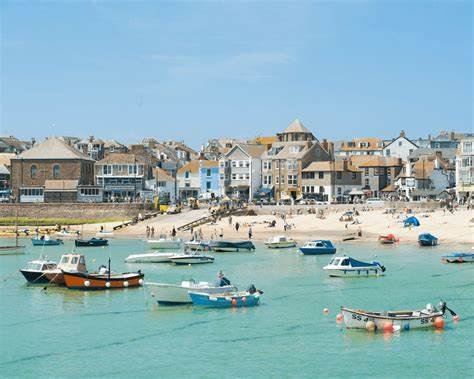
There are prettier-than-expected places, and then there is St Ives.
The first glimpse of the harbour explains why this small Cornish town keeps pulling people back: pale sand, clear water, whitewashed cottages, fishing boats, narrow lanes and an Atlantic horizon that seems to change colour by the hour.
But the real reason to visit is not one postcard view. St Ives works because several different holidays fit into the same compact place. You can surf before breakfast, spend the late morning with modern British art, walk a cliff path in the afternoon and eat beside the harbour after sunset.
Families, couples, walkers, artists and first-time Cornwall visitors all find something here without needing to drive from attraction to attraction. Cornwall’s official tourism site similarly highlights the combination of beaches, surfing, galleries, coastal scenery and food as central to the town’s appeal.
This guide focuses on the best things to do in St Ives, how to plan them sensibly, and the small decisions that can turn an ordinary sightseeing day into a genuinely memorable Cornish break.
Best Things to Do in St Ives at a Glance
If you only have a day, do not try to collect attractions like stamps. The town rewards a slower route.
Start around the harbour, continue through the old lanes towards Porthmeor Beach, visit Tate or the Barbara Hepworth Museum, walk across The Island, then finish with dinner or sunset near the water.
For a longer stay, add:
- A surf lesson or beach morning at Porthmeor
- A relaxed swim at Porthminster
- A boat trip towards Seal Island or Godrevy
- A section of the South West Coast Path
- Independent galleries and artist studios
- A pottery or creative experience
- A longer coastal walk towards Zennor
That combination gives you the strongest mix of coast, culture and local character rather than spending your holiday bouncing randomly between attractions.
1. Start with St Ives Harbour Before the Town Gets Busy
The harbour is the natural first stop because it explains the town better than almost any visitor centre could.
At low tide, sand opens beneath the harbour wall and boats settle onto the beach. As the water returns, the character changes again. Cafés, galleries, shops and old buildings crowd close to the waterfront, giving the area the unusual combination of a working maritime setting and a popular seaside destination.
Walk out along Smeaton’s Pier for a wider view back towards the town. The original pier dates from the 18th century and was subsequently lengthened when its lighthouse was added.
It is also one of the simplest places to understand the local geography: the harbour in front of you, Porthminster curving around the bay and the old streets climbing behind.
Local strategy: arrive early.
Between breakfast and late morning, the waterfront is generally easier to photograph and considerably easier to appreciate before the main flow of day visitors reaches the centre.
2. Visit Tate St Ives for Art with an Atlantic Backdrop
Tate is not here simply because tourists need something to do when it rains.
The gallery belongs in this landscape because the story of modern art in west Cornwall is deeply connected with the coastal environment around it.
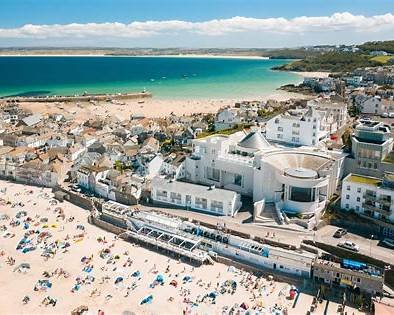
Overlooking Porthmeor Beach, Tate St Ives explores artists associated with the area while presenting changing modern and contemporary exhibitions. Its displays connect the local movement with artists including Barbara Hepworth, Peter Lanyon and Patrick Heron, while the wider Tate collection brings the story into an international context.
The setting matters.
Step outside after looking at abstract paintings and the curves of the bay, hard coastal light, granite landscape and constantly changing Atlantic suddenly give the art a geographical context.
Even visitors who would not normally plan a holiday around galleries should consider it. Allow roughly 90 minutes to two hours instead of charging around the rooms simply to say you have been.
For the strongest experience, combine Tate with Porthmeor immediately before or afterwards.
That relationship between art and landscape is one of the things that makes St Ives substantially different from a generic British seaside resort.
3. Slow Down at the Barbara Hepworth Museum and Sculpture Garden
The Barbara Hepworth Museum and Sculpture Garden gives visitors something Tate cannot: intimacy.
Hepworth established her studio and sculpture garden here in 1949 and continued living and working at the site for the remainder of her life. Today, visitors encounter her work among plants, stone walls and the surroundings in which much of her creative life unfolded. The site includes more than 30 works across materials including wood, stone, plaster and bronze.
The effect is quiet rather than monumental.
Sculptures are not simply isolated inside enormous white exhibition spaces. Their relationship with plants, shadows, openings and natural forms becomes part of the experience.
Give yourself time.
This is not a place improved by marching through with a checklist. For many art-minded visitors, it becomes one of the most memorable cultural stops in St Ives precisely because it still feels connected to an artist’s working environment.
4. Spend a Proper Beach Session at Porthmeor
Porthmeor is the beach for energy.
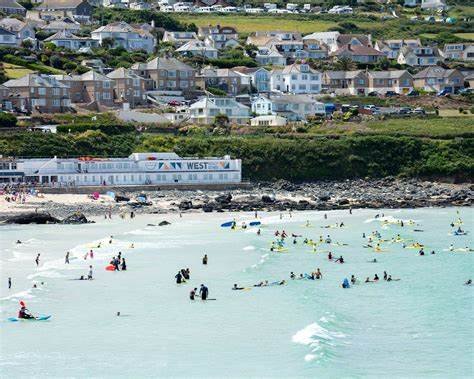
It faces the Atlantic, sits directly below Tate and is particularly well known for surfing. On calmer days it can also suit swimming, while rock pools towards the western side provide another reason for families to stay beyond simply lying on the sand.
Beginners can arrange surf tuition locally, while equipment hire and other water-based activities are available around the beach.
More experienced surfers should still check conditions rather than assuming a famous surfing beach is automatically suitable every day. Atlantic conditions change quickly.
Porthmeor also has one of the strongest sunset positions in town.
Stay late enough and the atmosphere changes completely: families begin packing up, surfers chase the final usable waves and the evening light becomes the main attraction.
5. Choose Porthminster When You Want an Easier Beach Day
Porthminster has a noticeably different personality.
It is a broad crescent of sand close to the railway station, looking across St Ives Bay towards Godrevy Lighthouse. It has also received recognised beach quality awards, including Blue Flag and Seaside Award status in recent years.
For families and travellers looking for a less surf-focused day, it is often the more relaxed option.
The town centre is nearby, the beach is spacious and you can move easily between swimming, food and sightseeing without committing the whole day to one activity.
It is also a logical first or final stop when arriving by train because the branch line approaches above the beach.
One practical point: seasonal dog restrictions apply to several local beaches, including Porthminster and Porthmeor. Exact dates and hours vary between beaches, so check current rules before travelling rather than trusting an old travel blog.
6. Walk Over The Island for One of the Best Free Views in St Ives
“The Island” sounds misleadingly dramatic.
It is actually a grassy headland connected to the town, positioned between Porthmeor and Porthgwidden.
The climb is relatively short, but the reward is disproportionate. You get broad views across the coastline, a clean look back towards the roofs and beaches and a much stronger sense of the Atlantic beyond the sheltered harbour.
The official Cornwall destination guide specifically recommends the walk from the harbour towards The Island for its coastal views.
The Chapel of St Nicholas on the headland adds another layer of history to the walk.
Come in the morning for clearer light or later in the day as the sun drops.
It is one of the best free things to do in St Ives, and unlike many major attractions, it requires virtually no planning.
7. Take a Boat Trip to See the Coast from the Water
A boat trip changes the scale of the landscape.
Wildlife and sightseeing trips leave the harbour for routes towards Seal Island or across the bay towards Godrevy Lighthouse.
Depending on sea conditions and luck, surrounding waters can produce encounters with seals, dolphins, seabirds and other marine wildlife. Some local operators also participate in wildlife-safe schemes or employ crew with marine wildlife experience.
Responsible operators, however, cannot guarantee wild-animal sightings.
That is not actually the main reason to go.
The greater value is perspective. Once you move offshore, the cliffs, coves and broad sweep of St Ives Bay become considerably easier to understand.
Book ahead during busy periods, but let weather and sea conditions make the final decision. A flexible itinerary is smarter than forcing a boat trip into uncomfortable conditions simply because you reserved Tuesday afternoon.
8. Walk a Section of the South West Coast Path
For walkers, the town is not merely the destination. It is a gateway.
The South West Coast Path, England’s longest waymarked footpath at approximately 630 miles, passes through this section of Cornwall and connects visitors with some of the region’s most dramatic coastal landscapes.
Head west and the terrain becomes progressively more rugged around Clodgy Point and towards Zennor.
Head in the other direction and you can explore stretches towards Carbis Bay and Lelant.
Do not underestimate the western route.
Official Coast Path guidance describes the 13.7-mile section from St Ives to Pendeen as challenging to severe and one of the toughest portions of the entire trail, thanks to rocky or boggy terrain, repeated climbs and remote stretches.
For a casual holiday walk, there is absolutely no requirement to conquer it.
Walk towards Clodgy Point, enjoy the exposed coastline, then turn around when you have had enough. You get a large portion of the drama without accidentally converting a relaxed afternoon into an endurance event.
9. Make Zennor Your Serious Walking Day
Zennor is where you go when you want Cornwall to feel wild again.
The coast around the village is rougher, quieter and less forgiving than the postcard centre.
The official five-mile Zennor walk is graded challenging, crossing sometimes difficult terrain while delivering substantial coastal views, wildlife interest and seasonal wildflowers. Public transport links also connect Zennor with nearby towns.
Strong walkers can build a longer point-to-point route from St Ives, but plan transport and daylight properly.
Carry water. Wear actual walking footwear. Check the forecast.
And do not use an urban Google Maps walking speed to calculate coastal travel time.
On rocky Cornish paths, five miles can feel significantly longer than five miles through a city.
10. Get Lost—Productively—in the Old Lanes
Some of the best time here is technically unplanned.
The streets around the harbour and old fishing quarter are narrow, irregular and packed with small galleries, cafés, studios and independent shops.
Rather than taking the most direct route between every attraction, occasionally choose the lane that simply looks interesting.
This is where St Ives starts feeling human rather than staged.
Stone buildings squeeze against one another. Workshop doors open onto tiny spaces. A narrow alley suddenly reveals the sea. Another deposits you beside a gallery you would never have deliberately searched for.
The centre is compact enough that getting slightly lost usually improves the experience.
The mistake is trying to rush it.
11. Browse the Independent Galleries, Not Just the Headline Museums
Tate gets international attention, but the broader gallery network gives the town its artistic depth.
Penwith Gallery is particularly significant.
Housed in a former pilchard-packing complex, it is home to the Penwith Society of Arts. The society was founded in 1949 by a group that included Barbara Hepworth, Ben Nicholson, Peter Lanyon, Bernard Leach and other influential artists.
The surrounding centre contains numerous smaller commercial galleries and studios.
Some concentrate on contemporary work. Others lean heavily towards coastal imagery aimed at visitors. That range is normal in a successful tourist town with a functioning arts community.
Look beyond framed seascapes.
Ceramics, sculpture, printmaking and contemporary craft are equally important parts of the area’s creative identity.
12. Check the Leach Pottery Programme Before Visiting
The Leach Pottery is one of the landmark names associated with British studio ceramics, but this is where current information matters.
As of July 2026, the site’s museum is closed for restoration. The organisation’s current visitor information states that museum restoration is expected to be completed in spring 2027. The shop remains open, while pottery learning and production activity continues through the redevelopment.
That does not make the site irrelevant.
It simply means you should not arrive expecting the traditional full museum experience described by older travel guides.
Check workshops, demonstrations, courses and current visitor access before setting off.
For anyone interested in pottery, craftsmanship or design, this remains an important part of the St Ives creative story—but in 2026, checking the official update before visiting is essential.
13. Eat by the Water—but Do Not Choose Purely by the View
The food scene is part of the appeal, but a harbour address does not automatically guarantee the best meal.
Use the obvious waterfront places when atmosphere and scenery are the priority.
For dinner, look one or two streets back as well. Smaller restaurants away from the busiest section can provide a calmer experience and, sometimes, more interesting menus.
Seafood is an obvious choice when it is fresh and responsibly sourced. Cornish crab, fish, shellfish, bakery food and ice cream all make sense here, but quality matters more than forcing yourself through a manufactured “Cornish food checklist.”
During peak season, make dinner reservations.
Waiting until 7 p.m. to start searching for a popular table is how visitors end up choosing restaurants based on desperation rather than quality.
14. Ride the Branch-Line Train Even If You Have a Car
The railway journey into St Ives is part transport, part sightseeing.
The branch line from St Erth runs around the bay, revealing beaches and coastal scenery before reaching the station above Porthminster.
The arrival of the railway in 1887 played a significant role in transforming the old fishing and trading port into a major visitor destination, and the route is still promoted for its scenic approach across St Ives Bay.
For drivers, leaving the car outside the central streets and using rail or park-and-ride arrangements can also remove one of the least enjoyable parts of visiting.
Visit Cornwall specifically recommends the St Erth park-and-ride approach as an alternative when parking around Porthminster is busy.
This becomes particularly important in summer.
Narrow streets plus high visitor numbers plus limited convenient parking is not a clever recipe for a relaxed morning.
15. Save Rainy Weather for Culture, Cafés and Making
Cornwall does not require permanent blue skies to work.
On a wet day, slow everything down.
Build the itinerary around Tate, the Barbara Hepworth Museum, independent galleries, cafés and shops. Depending on current availability, pottery or art workshops can turn what looked like a ruined beach day into one of the better days of the holiday.
Avoid the trap of treating rain as travel failure.
The cultural side of St Ives is strong enough to support an entire day without needing a beach.
One practical rule: bring a waterproof layer.
In coastal wind, an umbrella can quickly become more trouble than protection.
16. Plan St Ives Differently with Children
Families generally have a better trip when they stop trying to reproduce an adult sightseeing schedule.
Use the beaches as anchors.
Porthminster works well for a straightforward sand-and-sea session, while Porthmeor adds surfing and rock-pool exploration. Harbour Beach is exceptionally convenient because food, shops and the town centre are immediately behind it.
Then add one shorter cultural attraction, perhaps a boat trip if conditions cooperate, and plenty of unstructured time.
Children rarely care whether you completed twelve entries on a tourist checklist.
They usually remember the rock pool, enormous ice cream, first surf lesson or unexpected seal.
The town itself is compact, but some streets are steep and there are steps in several areas. Pushchair users should therefore check the route rather than assuming the shortest line on a map will be the easiest.
17. Stay for Sunset Instead of Leaving with the Day-Trippers
One of the easiest ways to experience the town better is simply to stay later.
After the busiest afternoon period, the rhythm changes.
Porthmeor is the obvious sunset beach, while The Island provides a higher viewpoint. Around the harbour, evening light begins reflecting from the water and buildings as daytime crowds start thinning.
This is also why staying overnight usually beats making a rushed visit.
You get early mornings and late evenings—the periods when St Ives can feel least crowded and most connected to the landscape that made it famous.
Do not spend three hours travelling here only to leave before the best light of the day.
How Many Days Do You Need in St Ives?
One day is enough to see the harbour, one major gallery, a beach and The Island.
It is not really enough to understand the place.
Two days works for first-time visitors who want the major sights without turning the trip into a race.
Three to four days is the stronger option if you want to include:
- A boat trip
- Coastal walking
- Proper beach time
- Tate and the Hepworth Museum
- Restaurants without rushing
- Independent galleries
- A slow morning or evening around the harbour
A week can also work well when St Ives becomes your base for exploring west Cornwall.
The key mistake is assuming every hour has to be filled with an attraction.
Leave room for weather, tides and spontaneous stops.
Best Time to Visit St Ives
July and August bring the classic British summer-holiday atmosphere, but they also bring the greatest visitor pressure, strong accommodation demand and more competition for parking and restaurant tables.
Late spring and early autumn often provide a better balance for travellers who prioritise walking, photography and exploring over peak-season atmosphere.
Winter is considerably quieter and can be atmospheric, although daylight is shorter and some tourism businesses operate reduced seasonal hours.
There is no universally perfect month.
Choose according to what actually matters to you:
- Traditional beach atmosphere: summer
- Coastal walking: spring or early autumn
- Photography: spring, autumn and quieter winter days
- Lower crowd levels: late autumn through early spring
- Surfing: check actual swell and wind forecasts rather than relying solely on the calendar
The best visit is the one planned around your priorities, not somebody else’s definition of “perfect weather.
Practical Tips That Make a St Ives Trip Easier
A little planning eliminates most of the frustrations people unnecessarily create for themselves.
- Do not build the day around driving between attractions.
The centre is compact. Walking is usually simpler. - Use the train when practical.
The St Erth branch is scenic and can remove central parking pressure. - Check tide times.
Harbour Beach and other parts of the coastline can look dramatically different within several hours. - Book headline experiences during peak season.
Boat trips, surf lessons and popular restaurants can fill. - Check official opening information.
Redevelopment, seasonal schedules and operational changes can make an old travel article obsolete—as the current Leach Pottery redevelopment illustrates. - Bring layers.
Sunshine, coastal wind and rain can appear remarkably close together. - Respect the sea.
Pay attention to beach flags, lifeguard guidance and current conditions. Porthmeor, for example, has seasonal RNLI lifeguard coverage. - Do not over-schedule coastal walking.
Rugged terrain around Zennor and farther west can make progress much slower than urban walking.
Conclusion: Build Your St Ives Trip Around Experiences, Not a Checklist
The strongest trips to St Ives mix three things: coast, culture and enough unscheduled time to wander.
See the harbour early.
Choose the beach that actually suits the weather and your plans rather than automatically visiting the one you have seen most often on social media.
Spend time with the art that helped turn a small Cornish fishing town into an internationally recognised creative centre. Then walk far enough along the coastline to feel the crowds disappear behind you.
Come back for food and evening light.
Most importantly, resist overplanning.
St Ives is compact, but it does not improve when rushed. Give the town two or three days when possible, let the weather influence the order of your itinerary and deliberately leave space for the unplanned lane, tiny gallery, unexpected swim or coastal viewpoint that becomes the part of Cornwall you actually remember.
That is the real attraction here.
Not completing a list.
Experiencing the place.
FAQs About Visiting St Ives
What are the best things to do in St Ives for first-time visitors?
Start with the harbour, Porthmeor Beach, Tate, the Barbara Hepworth Museum and a walk across The Island.
With additional time, take a wildlife or sightseeing boat trip and walk a section of the South West Coast Path. Together, these experiences give first-time visitors the strongest balance of Cornish scenery, artistic heritage and local character.
Is St Ives worth visiting if you do not like art galleries?
Yes. The art scene is historically important, but it is only one part of the destination. Beaches, surfing, coastal walking, boat trips, restaurants, independent shops and harbour scenery provide enough variety to fill several days without making galleries the centre of your holiday.
That combination is one of the main reasons Cornwall’s official destination guide positions the town as suitable for beach visitors, families, surfers and culture-focused travellers alike.
Can you visit St Ives without a car?
Yes—and during busy periods, arriving without one can actually be easier.
Rail passengers connect through St Erth and continue along the scenic branch line into town. Once you arrive, the harbour, central beaches, Tate and many galleries are accessible on foot.
Visit Cornwall also recommends the St Erth park-and-ride/rail approach when local parking is heavily used.
Where should you park when visiting St Ives?
Parking close to the centre can become difficult during busy periods, so do not automatically aim for the closest possible space.
Consider larger parking areas outside the tight central streets or use the St Erth park-and-ride and railway option. Always check current Cornwall parking and transport information before travelling because availability and seasonal arrangements can change.
How many days should you spend in St Ives?
Two days gives most first-time visitors enough time for the principal sights without constantly watching the clock.
Three or four days is better when you want beach time, museums and galleries, a boat trip and coastal walking.
