


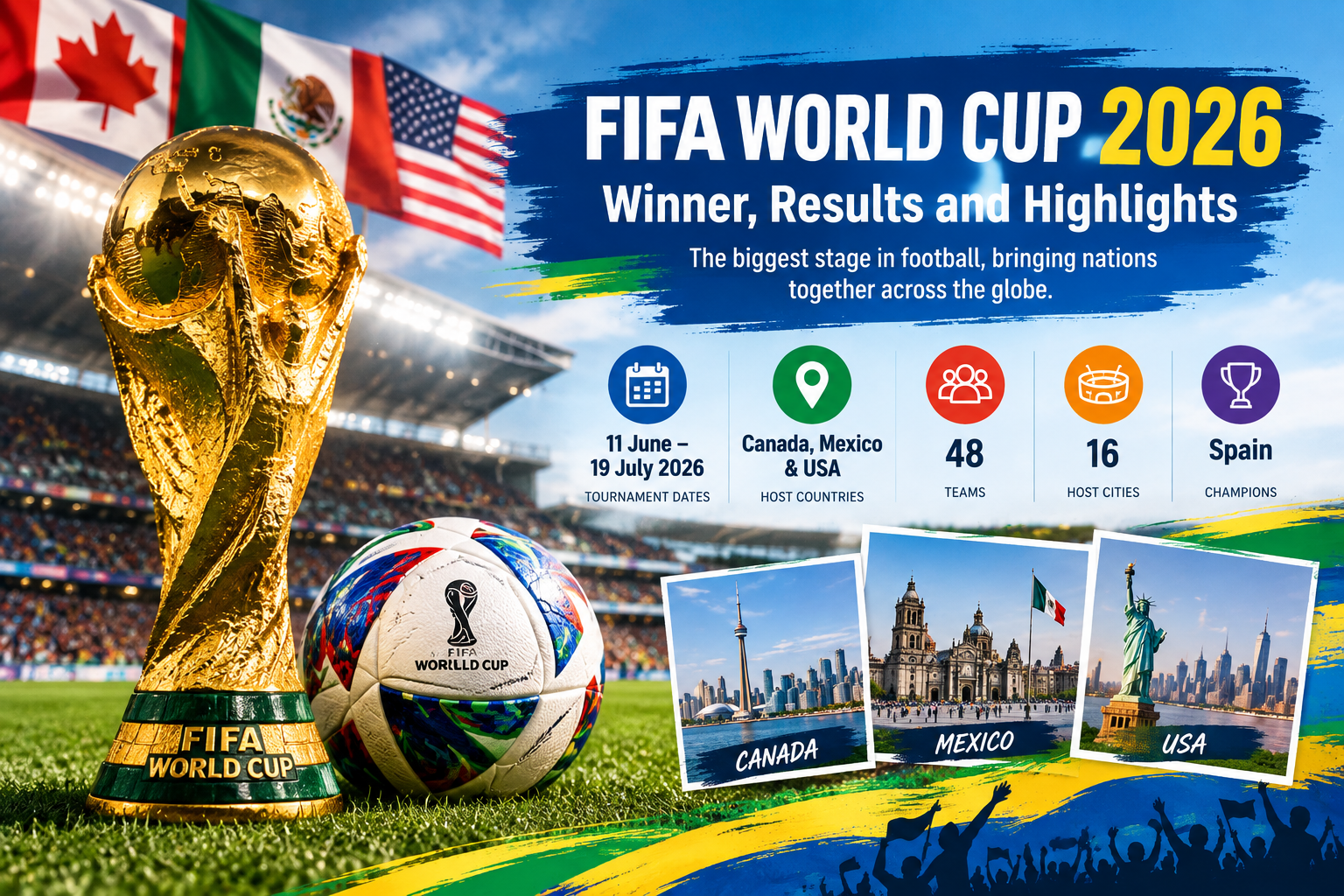
The FIFA World Cup is one of international football’s biggest competitions, bringing national teams and supporters together from around the world. The 2026 edition introduced a historic expansion to 48 teams and was hosted across Canada, Mexico and the United States.
The tournament ran from 11 June to 19 July 2026, featuring 104 matches across 16 host cities. Spain won the final against Argentina, securing a 1–0 victory after extra time and claiming the World Cup title for the second time in the country’s history. These details are confirmed by FIFA’s official tournament results.
This guide reviews the tournament format, final result, major developments and official resources fans can use to explore the competition further.
What Is the FIFA World Cup?
The FIFA World Cup is an international football tournament organised by FIFA. National teams qualify through regional competitions before competing for the sport’s most recognised international trophy.
Unlike club football, where players represent their teams throughout the domestic and continental seasons, the World Cup brings together players selected to represent their countries. This creates rivalries between national teams and gives supporters an opportunity to follow football beyond their usual domestic leagues.
The men’s World Cup is held every four years. Qualification, team selection, match schedules and tournament regulations are organised through FIFA and the relevant football confederations.
FIFA World Cup 2026: Key Facts
The 2026 tournament introduced several important changes and milestones.
| Tournament detail | Information |
|---|---|
| Host countries | Canada, Mexico and the United States |
| Tournament dates | 11 June–19 July 2026 |
| Participating teams | 48 |
| Total matches | 104 |
| Host cities | 16 |
| Champion | Spain |
| Runner-up | Argentina |
| Final score | Spain 1–0 Argentina after extra time |
For confirmed fixtures, results and tournament information, visit the official FIFA World Cup 2026 website.
Who Won the FIFA World Cup 2026?
Spain won the 2026 FIFA World Cup after defeating Argentina 1–0 following extra time in the final on 19 July 2026. The result gave Spain its second men’s World Cup title.
According to FIFA’s official match report, Ferran Torres scored the decisive goal in the 106th minute. The final took place at New York New Jersey Stadium.
Spain’s victory completed a tournament featuring the expanded 48-team format and 104 matches. Fans can read the official account in FIFA’s report on Spain’s World Cup victory.
How Did the 2026 Tournament Format Work?
The expanded competition featured 48 national teams rather than the 32-team format used in previous editions.
The tournament included a group stage followed by knockout rounds. Teams progressed through the competition according to the official regulations, with elimination rounds eventually determining the finalists.
The expanded format meant more participating nations and a larger overall schedule. It also created additional opportunities for supporters to watch national teams that had not previously competed in the tournament’s final stages.
For exact group standings, match results and knockout progress, FIFA’s official records are the most reliable reference.
Which Countries Hosted the Tournament?
Canada, Mexico and the United States jointly hosted the 2026 competition. It was the first men’s FIFA World Cup to be staged across three countries.
Hosting duties were distributed across 16 cities. The arrangement connected different football cultures and travel destinations across North America, while requiring extensive coordination of stadiums, transport, accommodation and tournament operations.
The multi-country format also made travel planning especially important for supporters attending matches in person. Fans needed to consider entry requirements, local transport, accommodation availability and the distance between host cities.
Official tournament information and the host-city overview are available through FIFA’s World Cup 2026 guide.
Why the FIFA World Cup Matters to Football Fans
The World Cup is more than a series of matches. It brings national identity, sporting achievement and international attention together in one competition.
National-team rivalries
Supporters follow their national teams through qualification and the final tournament. Matches between historic rivals often attract attention well beyond the countries involved.
Emerging football talent
Major international tournaments give players opportunities to compete against different styles of football and perform on a global stage. Strong performances can influence how supporters and clubs view emerging players.
International travel and tourism
World Cup host cities often receive visitors from different countries. Football-related travel can support hotels, restaurants, public transport and local attractions, although the benefits and costs vary between locations.
A shared sporting experience
For many fans, following the World Cup means watching matches with friends and family, discussing results and celebrating memorable performances. Those shared experiences help explain the tournament’s international appeal.
How to Find Reliable FIFA World Cup News
Football fans often encounter match reports, transfer rumours, social-media clips and tournament statistics from many sources. Not all online information is equally reliable.
Use these checks when reading World Cup coverage:
- Confirm the date: Old tournament schedules may continue circulating after a competition has finished.
- Check official results: Use FIFA’s match records for confirmed scores and standings.
- Verify player claims: Distinguish official announcements from speculation or unconfirmed reports.
- Check the original source: If a post makes a major claim, look for an official statement or reputable news report.
- Watch highlights legally: Use official FIFA channels or authorised broadcasters available in your country.
- Be cautious with misleading headlines: A headline may exaggerate a rumour or present an opinion as a confirmed fact.
FIFA’s official results and fixtures section is a useful starting point for checking tournament information.
What Can Fans Follow After the 2026 World Cup?
Although the 2026 men’s World Cup has concluded, international football continues through national-team fixtures, regional competitions, qualification campaigns and other major tournaments.
Supporters can follow official announcements about future international competitions, player selections and qualifying schedules. Dates should always be checked against the relevant governing body’s current calendar rather than copied from older articles.
Fans interested in the next men’s World Cup should monitor FIFA’s official website for confirmed host information, qualification details, ticket announcements and tournament updates.
Frequently Asked Questions
Who won the FIFA World Cup 2026?
Spain won the 2026 men’s FIFA World Cup, defeating Argentina 1–0 after extra time in the final on 19 July 2026.
Where was the FIFA World Cup 2026 held?
Canada, Mexico and the United States jointly hosted the tournament across 16 host cities.
How many teams played in the 2026 World Cup?
The expanded tournament featured 48 national teams and 104 matches.
When did the 2026 FIFA World Cup take place?
The tournament ran from 11 June to 19 July 2026.
Where can I check official FIFA World Cup results?
Visit FIFA’s official tournament website for fixtures, scores, standings and tournament information.
Final Thoughts
The 2026 FIFA World Cup marked a significant edition of international football, with 48 teams competing across Canada, Mexico and the United States. Spain’s victory over Argentina in the final brought the tournament to a close and added another chapter to the history of the competition.
For supporters, the best way to follow future tournaments is to use official results, verify developing news and check current schedules before making plans.
Editorial note: This article is a general tournament overview. Match results and future competition details should be verified against official FIFA records before republication or updating.
