


Introduction
Classroom 15x is a term that has attracted attention as educators, students, parents, and technology enthusiasts look for new ways to make learning more flexible and engaging. The phrase is not tied to one universally recognized educational standard. Instead, recent online discussions use it in several different contexts, particularly to describe technology-supported classrooms, small-group learning, flexible educational spaces, and, on some websites, browser-based gaming.
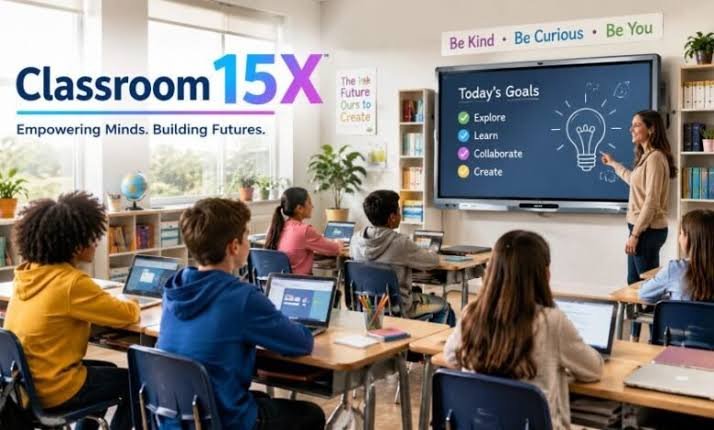
When discussed as an educational concept, Classroom 15x generally represents a move away from rigid rows of desks and one-directional lectures. It emphasizes adaptable spaces, student participation, digital resources, collaboration, personalized instruction, and practical learning activities. The central idea is simple: the classroom should support the way students actually learn rather than forcing every learner into exactly the same routine.
At the same time, it is important to separate genuine educational principles from marketing language. Claims that a particular model automatically produces “15 times” better academic results should not be treated as established scientific findings. Current sources describe the concept differently, which means readers should evaluate specific claims carefully.
Quick Bio
| Feature | Details |
|---|---|
| Topic | Classroom 15x |
| Main educational idea | Flexible, technology-supported and student-centered learning |
| Common focus | Collaboration, personalization, active participation and adaptable spaces |
| Typical classroom features | Movable furniture, learning zones, digital tools and group work areas |
| Technology | Interactive displays, tablets, educational platforms and other digital resources |
| Teaching approach | Project-based, interactive, differentiated and blended learning |
| Primary users | Students, teachers, schools and education planners |
| Important clarification | The term does not currently represent one universally standardized education framework |
What Is Classroom 15x?
At its broadest, Classroom 15x can be understood as a modern approach to designing and organizing learning. Instead of viewing a classroom simply as a room containing desks, chairs, a board, and a teacher, the concept treats the entire learning environment as part of the educational experience.
A flexible classroom may allow students to switch between independent study, group discussion, practical activities, presentations, and teacher-guided instruction. Furniture can be rearranged according to the activity, while digital resources can supplement books, worksheets, experiments, and face-to-face discussion.
Some online descriptions connect the “15” with small-group or approximately 15-student learning environments. Other interpretations use “15x” as branding for an ambitious improvement in educational effectiveness. Because these explanations are inconsistent, there is no reliable basis for treating one interpretation as the official definition.
The most useful way to understand the educational version is therefore as a collection of modern classroom principles rather than a fixed product.
Why Is Classroom 15x Becoming Popular?
Education has changed significantly because students now have access to information through computers, smartphones, educational platforms, digital libraries, videos, simulations, and artificial intelligence tools. Simply delivering information is no longer the only challenge. Teachers also need to help students evaluate information, solve problems, communicate ideas, work with others, and apply knowledge.
A traditional classroom can still accomplish many of these goals, but its physical and instructional design may need to become more flexible.
The Classroom 15x concept fits this shift by encouraging learning environments where students can participate rather than simply listen. It can support:
- Collaborative problem-solving
- Individualized instruction
- Digital literacy
- Project-based learning
- Peer-to-peer learning
- Active discussion
- Creative activities
- Formative assessment
- Practical experimentation
- Independent research
The goal is not necessarily to replace traditional teaching. Instead, the strongest interpretation combines effective conventional methods with newer tools and strategies.
Key Features of the Classroom 15x Approach
1. Flexible Classroom Design
One of the most noticeable features associated with Classroom 15x is flexibility.
Traditional classrooms often place desks in permanent rows. That arrangement can work well for examinations, direct instruction, or individual assignments, but it is less convenient for collaborative projects or discussion-based activities.
A flexible classroom can use lightweight or movable desks, adjustable seating, open areas, collaboration tables, and quiet corners. Teachers can rearrange the room according to the lesson.
For example, a science lesson might begin with a short teacher explanation. Students could then move into small groups for an experiment before returning to a discussion area to compare results.
This simple physical flexibility can make the classroom more suitable for different instructional methods.
2. Student-Centered Learning
Student-centered education places greater emphasis on what learners do, understand, create, and discuss.
Instead of spending an entire lesson listening to a lecture, students might investigate a question, complete a practical task, debate an issue, design a project, or explain a concept to classmates.
This does not mean the teacher becomes unnecessary. Quite the opposite: the teacher becomes an organizer, instructor, mentor, evaluator, and facilitator.
The strongest learning environments balance teacher expertise with student participation.
3. Technology Integration
Technology is another important part of the modern classroom concept.
Digital tools can provide access to interactive presentations, online resources, educational applications, simulations, digital assignments, assessment systems, and collaborative documents. Some descriptions of the model also mention AI-assisted learning, augmented reality, virtual reality, and data-based progress tracking.
However, technology should serve an educational purpose.
Adding tablets or large screens to a classroom does not automatically improve learning. A digital device is useful when it helps students investigate, practice, communicate, create, receive feedback, or understand something that would otherwise be difficult to demonstrate.
Good technology integration therefore begins with the learning objective rather than the device.
Personalized Learning in Classroom 15x
Students do not all learn at the same pace or arrive with identical levels of knowledge.
One learner may understand a mathematical concept immediately, while another may need additional examples and guided practice. A student may excel at written work but struggle with presentations. Another may understand an idea better through diagrams, experiments, or discussion.
Personalized learning attempts to respond to these differences.
Within a Classroom 15x-style environment, teachers can use differentiated assignments, flexible grouping, digital practice tools, formative assessments, and individual feedback. Students may sometimes receive different activities based on their current level or learning needs.
The objective is not to create a completely separate curriculum for every student. Instead, teachers can provide appropriate levels of support and challenge while keeping the broader learning objectives consistent.
The Role of Collaboration
Collaboration is another important element of modern learning environments.
Group work allows students to practice communication, negotiation, leadership, listening, and responsibility. A well-designed group task can also encourage students to explain their thinking rather than simply memorize information.
For example, a history teacher could ask groups to analyze different sources about the same historical event. Each group could prepare an argument before presenting its conclusions to the class.
A classroom designed for collaboration needs enough space for students to work together without making the room chaotic. This is where flexible furniture and clearly defined learning zones can become valuable.
Learning Zones and Classroom Organization
A flexible learning environment can contain different areas for different purposes.
Quiet Study Zone
This area is designed for reading, writing, independent research, or focused digital work. It should have fewer distractions and provide students with a place to concentrate.
Collaboration Zone
Students can use this space for group projects, discussions, peer teaching, and problem-solving activities.
Presentation Area
A presentation zone can include an interactive display, whiteboard, projector, or open space where students can explain their work.
Practical Learning Area
For subjects such as science, art, technology, and vocational education, a dedicated area can support hands-on tasks and experiments.
These zones do not require an expensive building redesign. Even an ordinary classroom can sometimes be reorganized through movable furniture, clearly defined activity areas, and thoughtful scheduling.
How Technology Can Support Teachers
A common misunderstanding is that technology is primarily intended to replace teachers. In a well-designed learning environment, technology should generally support teachers rather than eliminate their role.
Digital assessment tools, for example, can help teachers identify which students have mastered a concept and which students need additional support. Online resources can provide additional explanations or practice. Collaborative platforms can make it easier to organize group projects.
Artificial intelligence may also assist with lesson preparation, content generation, feedback, or personalized practice. However, AI-generated material still requires human oversight. Teachers need to check accuracy, age suitability, bias, privacy implications, and alignment with curriculum requirements.
Technology can make teaching more efficient, but professional judgment remains essential.
Benefits of Classroom 15x
A well-planned flexible classroom can provide several potential benefits.
Greater Student Engagement
Students are more likely to participate when lessons involve discussion, experimentation, projects, and meaningful tasks rather than passive listening alone.
Better Collaboration
Flexible spaces make it easier to move between individual work and group activities.
More Personalized Support
Smaller groups, differentiated activities, and frequent feedback can help teachers respond to individual learning needs.
Development of Future Skills
Modern education increasingly values communication, creativity, digital literacy, critical thinking, collaboration, and problem-solving.
Improved Classroom Adaptability
A flexible room can support different subjects and teaching methods without requiring a completely different physical environment for every lesson.
These are potential advantages, not guarantees. The quality of instruction, teacher preparation, curriculum design, school leadership, student needs, and available resources all influence educational outcomes.
Challenges of Implementing Classroom 15x
The concept also has limitations.
Cost
New furniture, digital equipment, network infrastructure, accessibility improvements, and maintenance can require significant investment.
Teacher Training
A flexible classroom can create additional complexity if educators have not received appropriate training. Teachers need time to learn how to manage collaborative activities, digital platforms, differentiated instruction, and new classroom layouts.
Distractions
More movement and technology can sometimes increase noise or reduce concentration. Clear routines and classroom expectations are essential.
Digital Inequality
Not every student has the same access to reliable devices, internet connections, or supportive home environments. Schools need strategies that prevent technology-based learning from widening existing gaps.
Privacy and Data Protection
Digital learning platforms can collect student information. Schools should carefully review data practices, permissions, security, and applicable regulations before adopting educational technology.
Accessibility
A modern classroom must work for students with different physical, sensory, cognitive, and learning needs. Accessibility should be part of the initial design rather than an afterthought.
Classroom 15x and Gamification
Gamification is sometimes associated with modern classroom concepts. It involves using selected elements commonly found in games—such as challenges, progress indicators, feedback, levels, or rewards—to make educational activities more engaging.
Used carefully, gamification can make repetitive practice more motivating. For example, students could complete a series of increasingly difficult vocabulary challenges while receiving immediate feedback.
But gamification should not turn every lesson into a competition. Some students may become discouraged by public rankings or excessive rewards. The educational objective should remain more important than the game mechanics.
Is Classroom 15x the Same as an Online Gaming Platform?
Not necessarily.
This distinction is particularly important because the phrase is used online for more than one purpose. Some current websites use Classroom 15x or similar names for browser-based gaming platforms, while other sources discuss the term as an educational model.
These should not automatically be treated as the same thing.
If someone is searching for an educational concept, they are likely interested in classroom design, learning strategies, technology integration, or personalized instruction. If someone is searching for an online gaming site, their intention is different.
Parents, students, and teachers should always verify the specific website they are visiting and follow their school’s acceptable-use and internet-safety policies.
How Schools Can Adopt the Model Gradually
Schools do not need to rebuild an entire campus to introduce modern classroom practices.
A practical implementation can begin with small changes.
First, teachers can identify lessons that would benefit from group work or flexible seating. Next, desks can be rearranged into small clusters. A quiet area can be created for independent work.
The next step could involve carefully selected digital tools. Rather than introducing many platforms simultaneously, schools can choose a small number that solve genuine classroom problems.
Teachers can then evaluate what worked. Did students participate more? Was classroom noise manageable? Did students complete their tasks? Did the technology save time or create additional work?
This continuous evaluation is more useful than adopting a trend simply because it appears innovative.
Classroom 15x for Teachers
For teachers, the most valuable part of the concept may be its emphasis on flexibility.
A teacher could begin a lesson with direct instruction, move students into groups for an activity, bring everyone together for discussion, and finish with an individual assessment.
This structure creates multiple opportunities to observe student understanding.
Teachers can also use short formative assessments to discover misconceptions before moving to a new topic. The results can inform the next lesson, small-group support, or additional practice.
In this sense, the modern classroom is less about a specific piece of furniture or software and more about creating an environment where teaching decisions can respond to student needs.
Classroom 15x for Students
Students can benefit from an environment that gives them more opportunities to participate actively.
Instead of always receiving information from a teacher, they may research questions, build projects, solve problems, explain concepts, review peer work, and reflect on their own progress.
This approach can also encourage greater responsibility. Students gradually learn how to manage time, organize tasks, communicate with classmates, and make decisions about how to approach an assignment.
However, student freedom works best when expectations are clear. Flexibility should not mean a lack of structure.
What Does the Future Look Like?
The future of education will probably involve a mixture of physical classrooms, digital resources, personalized learning, collaborative activities, and carefully selected artificial intelligence tools.
Virtual and augmented reality may become more accessible. Adaptive learning systems may provide more individualized practice. Digital assessment may help teachers identify learning gaps faster.
Nevertheless, technology alone cannot define effective education.
Students still need knowledgeable teachers, meaningful relationships, useful feedback, clear explanations, opportunities to practice, and a safe environment in which they can make mistakes and improve.
The most promising interpretation of Classroom 15x is therefore not “technology everywhere.” It is the thoughtful combination of space, pedagogy, technology, and human support.
Final Thoughts
Classroom 15x is best understood as a flexible educational idea rather than a single universally standardized program. Current online sources describe the term in different ways, so readers should be cautious about unsupported claims, especially claims suggesting that the approach automatically produces a specific numerical improvement in learning.
What makes the concept interesting is the collection of principles behind its educational interpretation: flexible classroom layouts, active participation, personalized instruction, collaboration, digital literacy, formative assessment, and purposeful technology use.
A successful modern classroom does not have to be expensive or filled with advanced devices. Sometimes the biggest improvement can come from something as simple as rearranging desks, creating a quiet learning area, changing a lecture into a problem-solving activity, or giving students more opportunities to explain their thinking.
Ultimately, effective education is not defined by a label. It is defined by whether students understand what they are learning, remain meaningfully engaged, receive appropriate support, and develop the knowledge and skills needed beyond the classroom. That is the real opportunity behind the ideas associated with Classroom 15x.
Frequently Asked Questions About Classroom 15x
1. What is Classroom 15x?
Classroom 15x is a term used online to describe different concepts. In educational discussions, it generally refers to a flexible, technology-supported and student-centered learning environment. However, the term is not currently associated with one universally accepted educational standard.
2. Does the “15x” mean there are exactly 15 students?
Not necessarily. Some websites interpret the number as referring to a small class or approximately 15 learners, while others use “15x” as branding for an ambitious improvement in learning. There is no universally established definition that requires every classroom to contain exactly 15 students.
3. What technology can be used in a Classroom 15x environment?
Depending on the school’s resources, technology may include interactive displays, tablets, computers, educational software, digital assessment tools, collaborative platforms, simulations, and AI-assisted learning applications. Technology should be selected according to educational needs rather than novelty.
4. Is Classroom 15x only suitable for expensive schools?
No. Many of its principles can be implemented without major investment. Schools can begin with flexible desk arrangements, collaborative activities, learning zones, peer instruction, formative assessment, and better use of existing resources.
5. Is Classroom 15x the same as a gaming website?
No. The name is used online in multiple contexts. Some websites use similar branding for browser-based gaming, while other sources use it to discuss modern classroom design and educational practices. Users should check the purpose and identity of a particular website before assuming what the term represents.
