


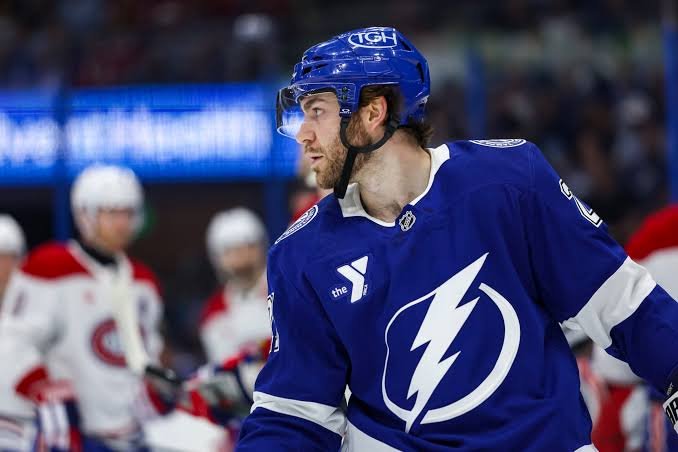
For serious fantasy NHL managers, Dobber Hockey has become a recognizable source for player projections, rankings, prospects, statistical analysis, and long-term roster strategy. Rather than concentrating only on NHL scores and headlines, the platform approaches hockey through a fantasy-management lens. It helps users evaluate player value, identify breakout candidates, understand changing line combinations, track prospects, and prepare for drafts. As the 2026–27 fantasy season approaches, the site remains active with updated rankings, projections, player analysis, and draft-focused resources designed for redraft, keeper, dynasty, roto, and salary-cap formats.
Quick Bio
| Feature | Details |
|---|---|
| Platform | DobberHockey |
| Primary Focus | Fantasy NHL projections and analysis |
| Launch Year | 2005 |
| Core Audience | Fantasy hockey and hockey pool managers |
| Major Coverage | Rankings, projections, prospects, line combinations, draft strategy |
| League Formats | Redraft, keeper, dynasty, roto, and salary-cap formats |
| Related Resources | DobberProspects, Frozen Tools, Goalie Post |
| Current Guide | 2026–27 Fantasy Hockey Guide |
DobberHockey and Goalie Post launched in 2005, while Frozen Tools and DobberProspects followed in 2008 as the broader Dobber Sports Network developed.
What Is Dobber Hockey?
Dobber Hockey is a fantasy-hockey-focused website built around NHL player evaluation rather than traditional game reporting alone. Its articles and tools examine a question fantasy managers constantly face: What does this development mean for a player’s fantasy value?
An NHL player can be excellent in real hockey without necessarily being an elite fantasy asset. A defensive forward may be invaluable to his team but provide limited goals, assists, shots, power-play points, hits, or blocks. Conversely, an offensively gifted player receiving strong power-play deployment may become extremely valuable in a particular fantasy scoring system.
This distinction is central to the site’s approach.
Its content covers immediate decisions, such as roster moves and changing deployment, while also examining long-term value for dynasty and keeper managers. That combination gives readers access to analysis that can be useful before a draft, during the regular season, around trade deadlines, and throughout the offseason.
The History Behind Dobber Hockey
The platform has a relatively long history within online fantasy hockey. DobberHockey and Goalie Post were launched in 2005, which the network describes as the beginning of its independent fantasy-hockey and starting-goalie coverage. Frozen Tools and DobberProspects arrived in 2008 and helped expand the ecosystem into statistics, player research, and prospect analysis.
That history matters because fantasy sports analysis has changed dramatically.
Modern fantasy managers have far more information than players did two decades ago. Advanced statistics, expected-goal models, ice-time data, power-play deployment, line combinations, prospect scouting, schedule optimization, and category-specific player values can now influence decisions.
The challenge is no longer simply finding information. It is interpreting that information correctly.
This is where specialized fantasy resources can provide value.
Why Dobber Hockey Is Popular With Fantasy Managers
A major strength of Dobber Hockey is its fantasy-first perspective.
A regular NHL report might announce that a player moved to another line. Fantasy analysis goes further by asking whether the move increases his ice time, quality of linemates, offensive opportunities, or power-play exposure.
That difference becomes particularly valuable in competitive leagues.
Fantasy managers are constantly comparing players who may have completely different profiles. One player might score more goals, while another contributes assists, shots, hits, blocks, and power-play production. The better fantasy asset depends on league settings.
Dobber’s rankings reflect this format-sensitive approach. The site’s rankings section specifically covers formats such as dynasty, keeper, and salary-cap leagues rather than presenting every player through a single universal valuation model.
Dobber Hockey Rankings and Player Valuation
How Dobber Hockey Rankings Help Fantasy Players
Player rankings are among the most useful resources for anyone preparing for a fantasy NHL season.
Dobber regularly publishes rankings aimed at different purposes. This distinction is important because short-term and long-term player values are not the same.
A veteran may be a strong option for the upcoming season but carry declining dynasty value. Meanwhile, a talented 20-year-old prospect might provide limited immediate production while possessing much stronger long-term upside.
For example, Dobber published its Top 300 Keeper League Skaters rankings in July 2026, focusing specifically on players for points-only dynasty formats.
The site also maintains dedicated goaltender rankings. Its April 2026 keeper rankings evaluated 100 goalies for points-only fantasy dynasty leagues, illustrating how specialized the ranking system can become.
This format separation helps fantasy managers avoid one of the most common mistakes in player evaluation: using a ranking designed for one league type in an entirely different scoring environment.
Dobber Hockey Roto Rankings
Roto leagues create another evaluation challenge because managers must balance several statistical categories simultaneously.
A player who scores heavily but contributes little elsewhere may be less valuable than someone producing across goals, assists, shots, hits, blocked shots, and special-teams categories.
Dobber’s May 2026 roto rankings, for example, evaluated skaters using goals, assists, power-play points, shots on goal, hits, and blocked shots.
That approach highlights an essential fantasy hockey concept: player value is dependent on scoring settings.
Before using any ranking, managers should compare the ranking methodology with their league rules. Points leagues, category leagues, dynasty formats, keeper leagues, and salary-cap competitions can produce very different values for the same NHL player.
Dobber Hockey Fantasy Projections
Projections attempt to estimate what players could produce during an upcoming season.
They should never be treated as guaranteed predictions. Injuries, trades, coaching decisions, unexpected line changes, rookie development, and shooting-percentage swings can quickly alter a player’s outlook.
However, projections still give managers a useful starting point.
The 2026–27 Fantasy Hockey Guide includes player projections, team-by-team analysis, offseason changes, schedule considerations, rookies and potential call-ups, and other draft preparation information. The guide is also designed to receive updates as training-camp developments affect projected roles.
This is particularly useful during the preseason because fantasy values can shift dramatically between early summer and opening night.
A winger expected to play on the third line in July could earn a first-line role during training camp. A promising rookie might make the NHL roster earlier than expected. An injury could create a major opening on a top power-play unit.
Updated projections help account for those changes.
Dobber Hockey Prospects and Dynasty League Strategy
Why Prospects Matter on Dobber Hockey
Prospect evaluation is one of the biggest differences between ordinary fantasy leagues and dynasty formats.
In a standard redraft league, managers usually care about the coming season. In dynasty hockey, an asset may be held for several years. That means managers must evaluate not just current NHL production but developmental trajectory, offensive upside, organizational opportunity, and estimated arrival time.
Dobber’s prospect coverage extends through DobberProspects and dedicated fantasy rankings.
The July 2026 prospect-forward rankings incorporated players from the 2026 NHL Draft class and focused on long-term fantasy ownership in points-only dynasty leagues.
Its 2026 Fantasy Hockey Prospects Report also covers fantasy-relevant prospects across NHL organizations and includes projected upside, estimated NHL arrival, and a metric called 3YP, representing a projected three-year average during a player’s stronger NHL seasons if he develops successfully.
For dynasty managers, information like this can help distinguish between a famous prospect and one whose skill set is particularly attractive for fantasy scoring.
Using Dobber Hockey for Keeper Leagues
Keeper leagues sit somewhere between redraft and full dynasty formats.
Managers might retain only a handful of players each season, which makes long-term valuation complicated. Keeping an aging star could maximize next-season production, but retaining a younger player might provide better value over several years.
This creates difficult decisions around age curves, contracts, team depth charts, prospect competition, injuries, and expected offensive roles.
Dobber’s keeper rankings are designed to help frame those decisions.
Still, managers should treat rankings as decision-support tools rather than fixed rules. League structure always matters.
A 10-team league with three keepers creates a completely different player market from a 16-team league where managers retain most of their rosters.
Dobber Hockey and NHL Line Combinations
Line combinations are one of the most actionable pieces of information in fantasy hockey.
A player’s talent is only part of his fantasy outlook. Opportunity can be equally important.
Moving from a checking line to an offensive line can increase scoring chances. Playing alongside a star center can improve finishing opportunities. Losing a place on the first power-play unit can reduce fantasy production even if five-on-five performance remains strong.
Dobber’s line-combination resources provide seasonal and game-by-game lineup trends, including information based on recent NHL games.
Managers can use line data alongside ice time, power-play usage, shot rates, and recent production to determine whether a scoring surge is sustainable or simply the result of a short hot streak.
Frozen Tools and Advanced Fantasy Hockey Research
Frozen Tools adds a statistical dimension to the broader Dobber ecosystem.
Advanced fantasy managers increasingly look beyond goals and assists. They may study shot attempts, individual shooting rates, expected production, on-ice combinations, deployment, special-teams usage, and historical trends.
These metrics can uncover players whose future results may differ from their recent box scores.
Imagine a forward who has only scored twice during a difficult month but is generating a high number of shots while maintaining strong power-play deployment. His results may look disappointing, but the underlying opportunity could suggest improvement.
The opposite can also happen.
A player converting an unusually high percentage of shots may produce impressive early totals that are difficult to sustain.
Dobber’s August 2026 analysis specifically examined players who could be affected by lower shooting percentages during the 2026–27 season, demonstrating how regression analysis can become part of fantasy evaluation.
Dobber Hockey Sleepers and Breakout Candidates
Identifying breakout players is one of the most valuable skills in fantasy hockey.
The obvious superstars are usually drafted early. Competitive advantages often appear later, when managers find players whose roles or production are about to improve.
Potential breakouts can emerge because of increased ice time, a new linemate, better power-play deployment, roster departures, recovery from injury, natural development, or improved shooting opportunities.
Dobber continues to publish forward-looking analysis in this area. In July 2026, the site released a feature examining ten players who could make significant production jumps in 2026–27.
The useful lesson is not simply to copy a sleeper list. Fantasy managers should understand why a player is being identified as a breakout candidate.
A strong reason is more valuable than a catchy label.
Schedule Analysis and Roster Optimization
Fantasy hockey championships are sometimes decided by scheduling rather than star power.
In head-to-head formats, a slightly weaker player with four games in a week can potentially provide more total value than a stronger player with only two games.
Off-night scheduling can matter too.
If most NHL games occur on Tuesday, Thursday, and Saturday, fantasy managers may already have full starting lineups on those days. Players whose teams play on quieter nights can provide additional usable games.
Dobber’s Looking Ahead coverage focuses on NHL schedule analysis, weekly games played, off-night advantages, and roster optimization for head-to-head formats and fantasy playoffs.
This type of strategic planning becomes increasingly valuable late in the season when every additional start can influence a playoff matchup.
Dobber Hockey for Goaltender Research
Goalies are often the hardest position to project.
Skater opportunity can change, but goaltender value is particularly sensitive to team quality, workload, competition for starts, injuries, and coaching decisions.
An excellent goalie playing behind a weak defensive team may struggle to produce wins. A less dominant individual goalie on a strong team could become valuable because of victories and workload.
Fantasy managers therefore need to evaluate both performance and situation.
Dobber covers goaltenders through keeper rankings, prospect lists, seasonal analysis, and its wider network. Its Spring 2026 prospect goalie rankings evaluated 50 developing goaltenders for long-term fantasy purposes.
For dynasty leagues, patience is especially important with this position because goaltenders often develop on different timelines from elite skaters.
The 2026–27 Dobber Hockey Fantasy Guide
As of August 2026, the 2026–27 Fantasy Hockey Guide is available through the Dobber Sports store. The current edition provides projections, team analysis, draft preparation information, schedule discussion, regression candidates, developing players, and other resources aimed at the upcoming NHL fantasy season.
The guide is particularly relevant during the preseason, when depth charts can change quickly.
Training-camp cuts, injuries, trades, rookie performances, and coaching decisions can all affect draft rankings. Dobber states that its guide is updated throughout training camp as new information affects projections and player roles.
That makes freshness one of the important considerations when comparing preseason fantasy material.
How to Use Dobber Hockey More Effectively
The best way to use any fantasy resource is to combine its analysis with your own league rules.
A universal player ranking can only take you so far.
Suppose one league awards points mainly for goals and assists while another heavily rewards hits, blocks, shots, and penalty minutes. The same NHL player may have dramatically different fantasy value in those two environments.
Start by understanding your scoring categories, roster sizes, starting positions, keeper limits, transaction rules, and playoff schedule.
Then use projections and rankings as a baseline.
From there, examine line combinations, power-play deployment, injuries, prospect competition, schedule strength, and recent underlying statistics.
This creates a much stronger decision-making process than blindly following a single ranking.
Is Dobber Hockey Useful for Beginners?
Yes, although beginners should avoid trying to absorb every metric immediately.
New fantasy players can begin with player rankings, projections, team depth charts, and basic line combinations. These resources provide enough information to prepare for most standard leagues.
As experience grows, managers can gradually incorporate dynasty valuation, advanced metrics, regression analysis, prospect timelines, streaming strategy, and schedule optimization.
The deeper sections become especially useful in competitive leagues where most managers already know the obvious NHL stars.
Is Dobber Hockey Reliable?
Fantasy projections can never be perfectly accurate because professional sports are unpredictable.
The more appropriate question is whether a source provides structured information that helps users make better decisions.
Dobber has been producing specialized fantasy-hockey coverage since 2005 and continues to maintain dedicated rankings, NHL analysis, prospect coverage, projections, schedule tools, and fantasy guides.
Readers should still compare multiple sources whenever making important draft or trade decisions.
Expert analysis is most valuable when it becomes part of a larger evaluation process rather than replacing independent judgment.
Dobber Hockey vs. General NHL News Sites
The biggest difference is intent.
General hockey websites primarily report what happened.
Fantasy-focused platforms examine what those developments could mean for player ownership and roster strategy.
If a player receives additional power-play time, a traditional news article may simply report the lineup change. A fantasy manager wants additional answers.
Will the player receive enough minutes to matter? Is the promotion likely permanent? Does his shot rate support increased scoring? Who lost power-play time? Should managers add him immediately, monitor him, or ignore the change?
That extra layer of interpretation is where specialized fantasy analysis becomes useful.
Why Dobber Hockey Remains Relevant in 2026
Fantasy hockey has become increasingly data-driven, but having more data does not automatically create better decisions.
Managers still need context.
Statistics need to be connected with deployment. Prospect rankings need to account for development timelines. Draft rankings need to reflect league settings. Recent production needs to be separated from sustainable performance.
Dobber’s continued emphasis on rankings, projections, prospects, schedule strategy, line combinations, and fantasy-specific interpretation makes the platform relevant heading into the 2026–27 season. Its latest guide and August 2026 fantasy content also show that the network remains actively updated rather than functioning merely as an archive of older hockey material.
Conclusion
Dobber Hockey is more than a collection of NHL player rankings. It is a fantasy-focused research ecosystem covering projections, dynasty assets, prospects, goaltenders, line combinations, advanced statistics, schedule optimization, draft preparation, sleepers, and long-term player value.
Its greatest value comes from helping managers interpret hockey developments through the lens of fantasy competition.
Beginners can use the rankings and projections to build a stronger draft foundation, while experienced managers can dig deeper into prospect development, regression indicators, category-specific value, deployment trends, and keeper strategy.
With the 2026–27 season approaching, the platform continues to publish updated fantasy analysis and preseason resources. Used alongside a clear understanding of your league’s scoring system, Dobber’s research can help transform raw NHL information into smarter roster decisions.
FAQs About Dobber Hockey
What is Dobber Hockey used for?
Dobber Hockey is primarily used for fantasy NHL research. It provides player rankings, fantasy projections, prospect analysis, keeper and dynasty information, line-combination data, draft strategy, schedule analysis, and other tools that help fantasy managers evaluate players and manage rosters.
Is Dobber Hockey good for dynasty leagues?
Yes. Dynasty and keeper analysis are major parts of the platform. Its long-term rankings and prospect coverage can help managers compare established NHL players with younger assets whose fantasy value may take several seasons to develop.
Does Dobber Hockey provide fantasy hockey projections?
Yes. Player projections are a major component of its fantasy resources. The 2026–27 Fantasy Hockey Guide includes projections and team-by-team analysis and is updated as preseason developments affect player roles.
Does Dobber Hockey cover NHL prospects?
Yes. Prospect coverage is available through both DobberHockey and DobberProspects. The network publishes fantasy prospect rankings and detailed reports designed especially for managers in keeper and dynasty leagues.
Is Dobber Hockey still active in 2026?
Yes. As of August 2026, the site is actively publishing fantasy hockey articles and rankings, while its 2026–27 Fantasy Hockey Guide is available for the upcoming season.
